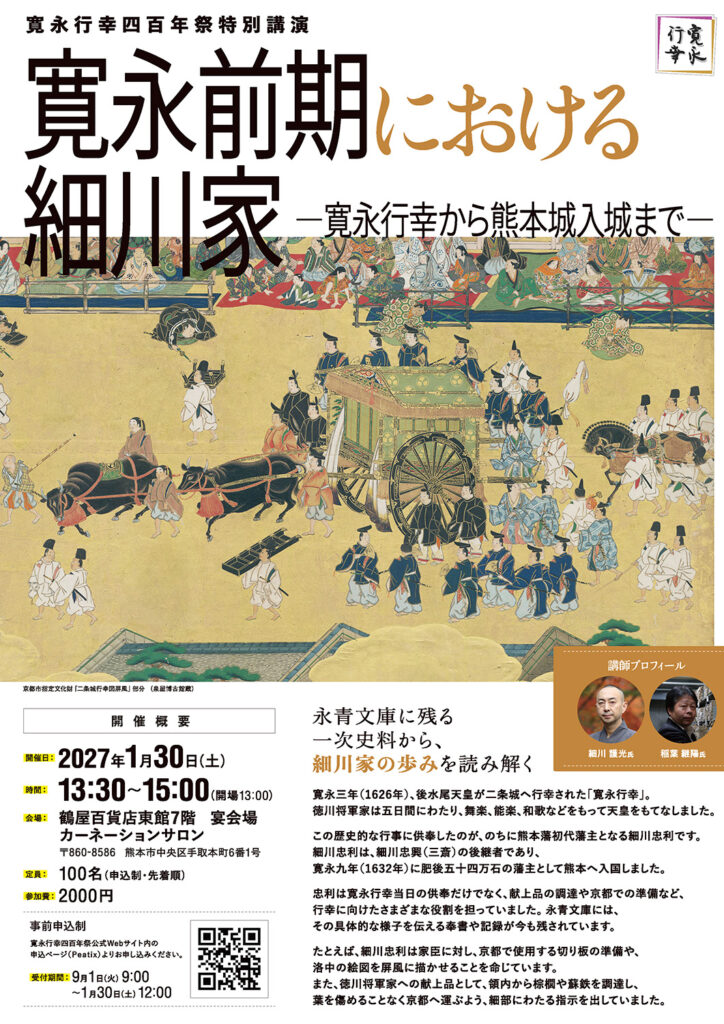
In 1626 (Kan’ei 3), Hosokawa Tadatoshi, who would later become the first lord of the Kumamoto Domain, played a variety of roles in preparation for the Kan’ei Gyoko. In addition to accompanying the Imperial procession on the day of the visit, he was involved in procuring gifts to be presented and making preparations in Kyoto. The Eisei Bunko Museum, which preserves works of art, historical documents, and records handed down through the Hosokawa family, still holds letters and other records that provide detailed insight into these activities.
Then, in 1632 (Kan’ei 9), Tadatoshi succeeded Hosokawa Tadaoki (Sansai) and entered Kumamoto as lord of the 540,000-koku Higo Domain.
This special lecture will welcome Morimitsu Hosokawa, a descendant of Hosokawa Tadatoshi and Chairman of the Eisei Bunko Foundation, together with Tsuguo Inaba, Director of the Eisei Bunko Research Center. Drawing on primary historical sources preserved by Eisei Bunko, they will trace the political and cultural path of the Hosokawa family from the Kan’ei Gyoko to their entry into Kumamoto Castle.
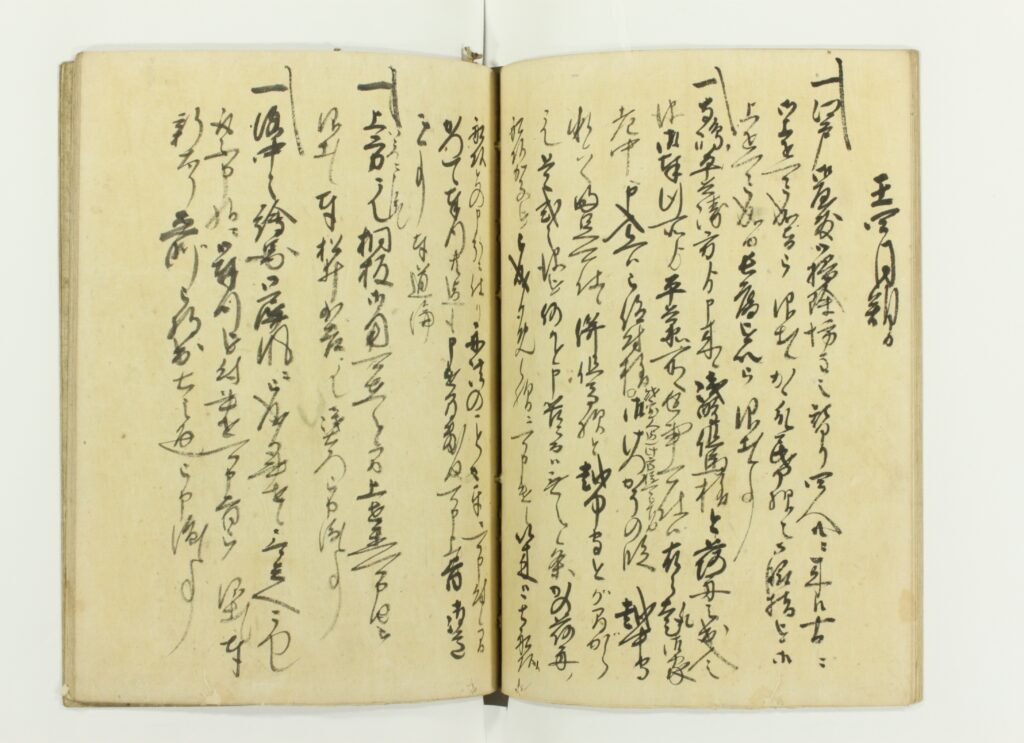
Hōsho (official written order) dated the first day of the intercalary fourth month, 1626 (Kan’ei 3), conveying Tadatoshi’s instructions
<Eisei Bunko Collection>
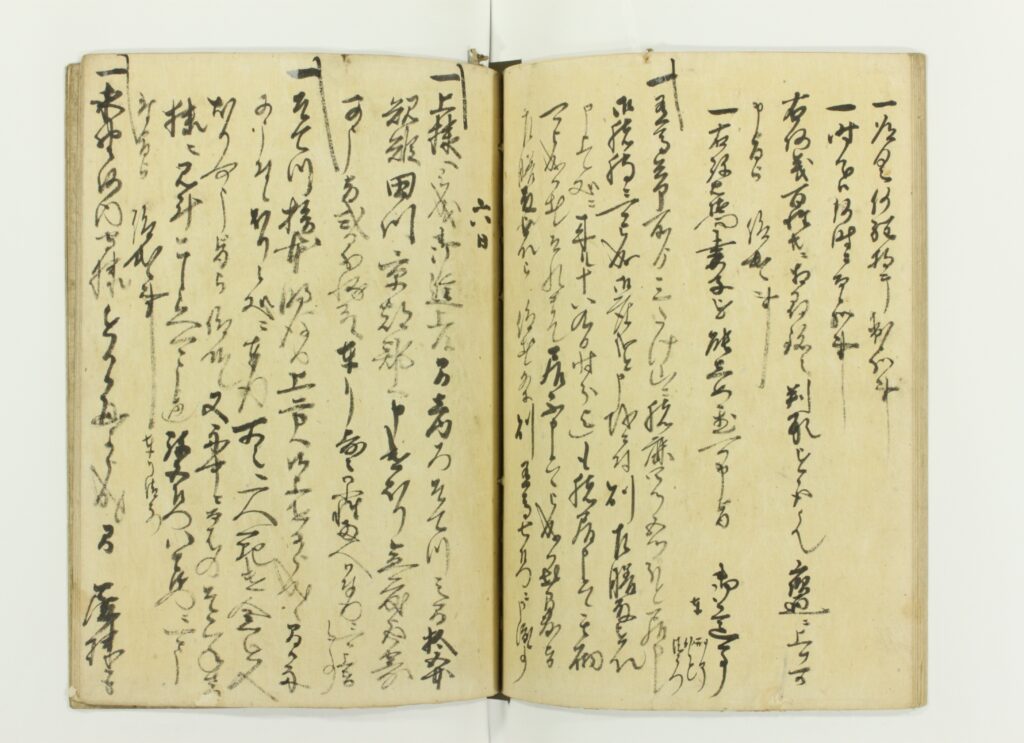
Hōsho (official written order) dated the sixth day of the intercalary fourth month, 1626 (Kan’ei 3), conveying Tadatoshi’s instructions
<Eisei Bunko Collection>
These historical records reveal that the Kan’ei Gyoko was not an event confined to Kyoto alone. Rather, it was an undertaking on a national scale, prepared with the involvement of daimyo and their domains across Japan.
Lecturer Profiles
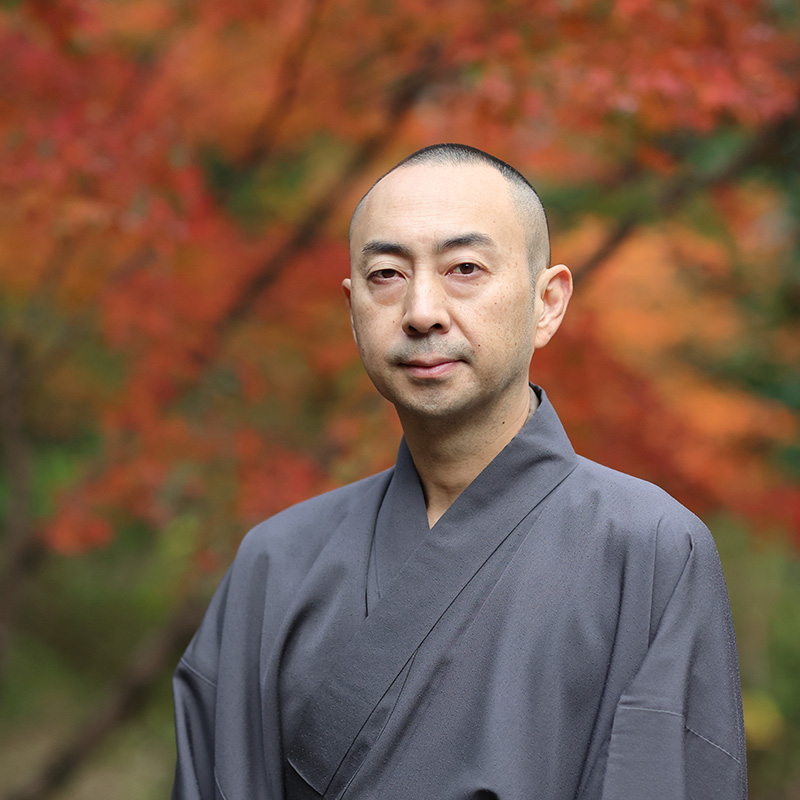
Morimitsu Hosokawa
Ceramic artist and Chairman of the Eisei Bunko Foundation.
After studying under Masatake Fukumori at the Iga Doraku Kiln in Mie Prefecture and later working at Futoan, the studio of his father, Morihiro Hosokawa, he established his own kiln in Kumamoto in 2006. His work encompasses a range of ceramic traditions, including Shigaraki, Karatsu, Korean-style ceramics, and Raku ware. He also serves as chief priest of Izumi Shrine and Chairman of the Chanoyu Dokokai (Tea Ceremony Association).
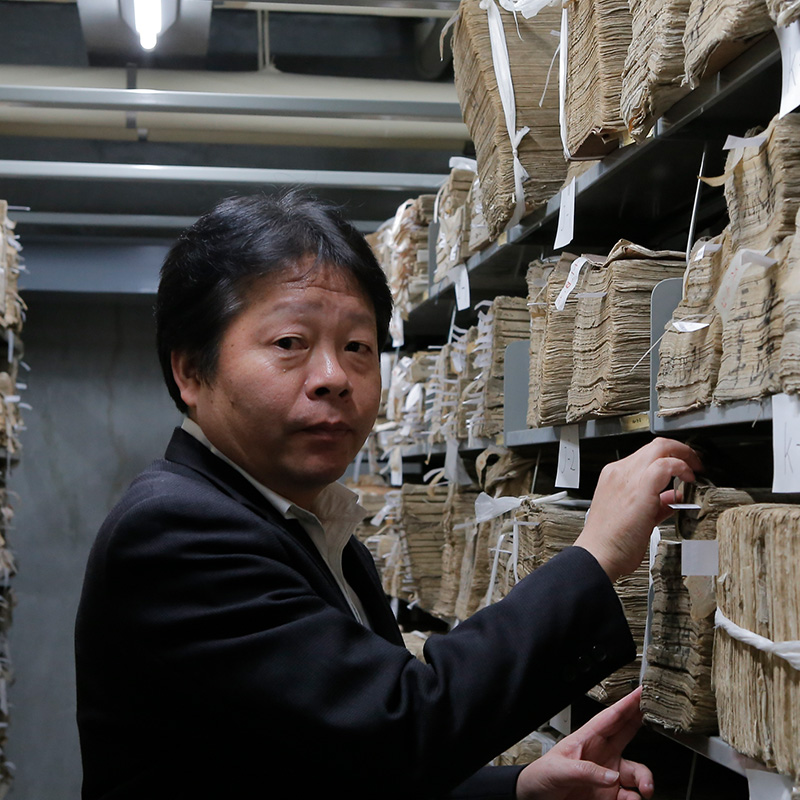
Tsuguo Inaba
Professor at Kumamoto University and Director of the Eisei Bunko Research Center at Kumamoto University. He specializes in medieval and early modern Japanese history, with a particular focus on the social structures of the 16th and 17th centuries. Drawing on historical documents from the Hosokawa family preserved by Eisei Bunko, as well as the Matsui family archives and other sources, he has conducted extensive research into the political history of the Hosokawa family in the early Edo period. His publications include “Hosokawa Tadatoshi” and “A Historical Study of the Formation of Early Modern Domain Society.”
Main Themes of the Lecture
● The Kan’ei Gyoko and the Hosokawa family
● The political and social circumstances of western Japan and Kyushu in the early Kan’ei era, and the path taken by the Hosokawa family
● The events leading to the Hosokawa family’s entry into Kumamoto Castle in 1632 (Kan’ei 9)
● How the Hosokawa family was involved in the Kan’ei Gyoko four centuries ago, and how subsequent changes of the era ultimately led them to Kumamoto
Drawing on valuable historical sources preserved in Kumamoto, the lecture explores the Kan’ei era and the path taken by the Hosokawa family.
Event Overview
| Date & Time | Saturday, January 30, 2027 1:30–3:00 p.m. (Doors open at 1:00 p.m.) |
|---|---|
| Venue | Carnation Salon, 7th Floor, East Building, Tsuruya Department Store 6-1 Tetorihoncho, Chuo-ku, Kumamoto 860-8586 |
| Capacity | 100 participants (Advance registration required; first-come, first-served) |
| Participation Fee | ¥2,000 |
| Organizer | Kan’ei Gyoko 400th Anniversary Festival Executive Committee |
| Co-organizer | Living History KYOTO Association |
| Sponsor | Tsuruya Department Store Co., Ltd. |
| Supported by | Kumamoto Prefectural Board of Education; Kumamoto City |
How to Register
Please complete the required information and register via the link below.
※ Registration Period: Tuesday, September 1, 9:00 a.m.–Saturday, January 30, 12:00 noon
Register in Advance (Peatix)