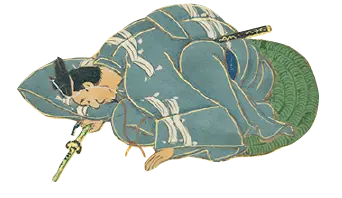
Shinnai-bushi, a form of joruri (traditional Japanese narrative music), enjoyed immense popularity during the Edo period (1603–1868) as a form of “theatre experienced through listening.” Its origins can be traced to Kyoto.
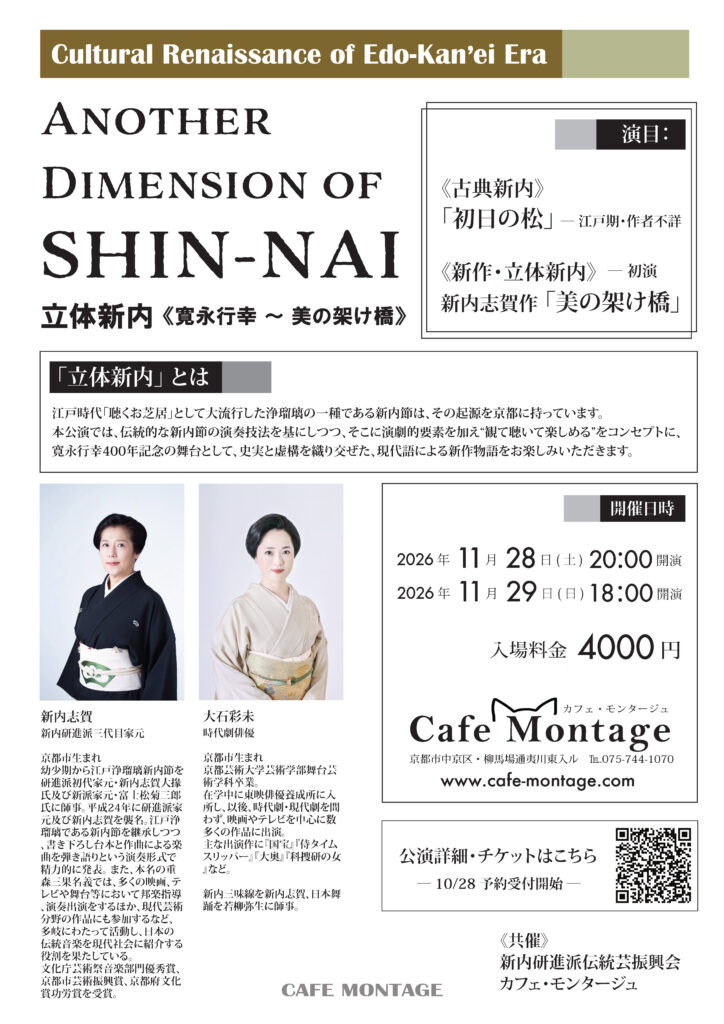
Building on the traditional performance techniques of Shinnai-bushi, the Shinnai Kenshin-ha Traditional Performing Arts Promotion Association has developed its own distinctive performance style, known as Rittai Shinnai (Three-Dimensional Shinnai). By incorporating theatrical elements, this style is designed to offer audiences an experience that can be enjoyed through both sight and sound.
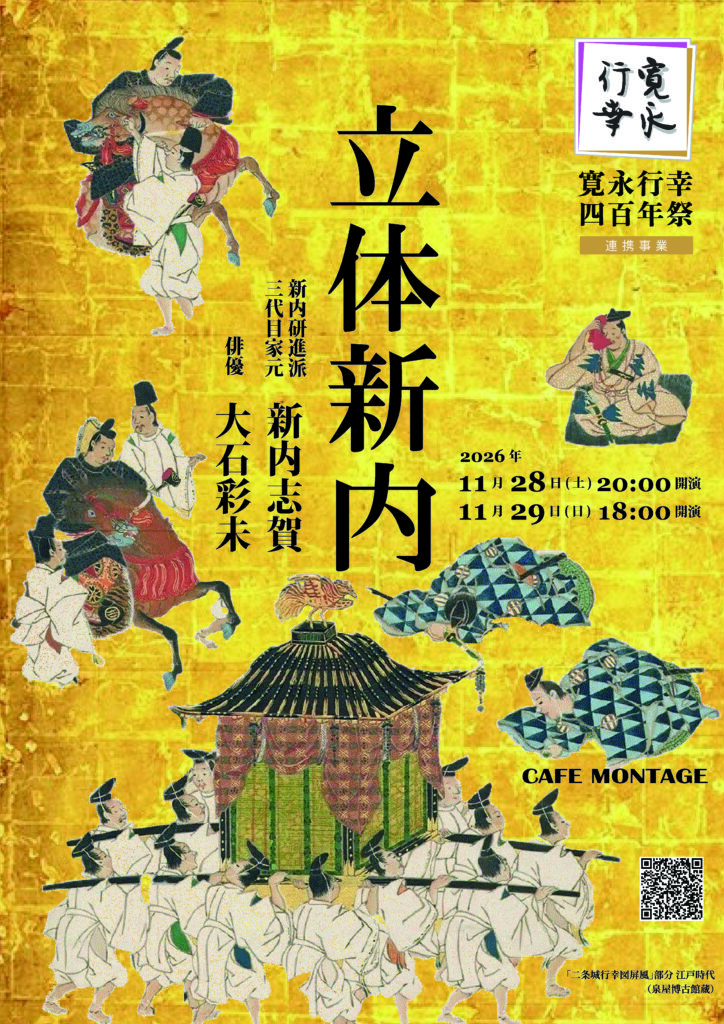
This special performance, held at Café Montage over two days, Saturday, November 28, and Sunday, November 29, commemorates the 400th anniversary of the Kan’ei Gyoko (Imperial Visit to Nijo Castle in 1626).
Audiences will be treated to a newly written story presented in contemporary Japanese, weaving together historical facts and fiction.
Program
Classical Shinnai Performance
“Hatsuhinode no Matsu” (The Pine of the First Sunrise)
Edo period; author unknown
New Rittai Shinnai (Three-Dimensional Shinnai) Performance — World Premiere
“Kan’ei Gyoko: A Bridge of Beauty”
Written by Shinnai Shiga
Synopsis
An Untold Story Behind the Scenes in Kyoto 400 Years Ago
Kyoto, 400 years ago.
Although the age of warfare had come to an end, tensions persisted between the Tokugawa Shogunate and the Imperial Court.
Tokugawa Masako was a woman who stepped into the center of history as the Emperor’s wife.
Oyotsu was a woman who, despite being loved by the Emperor, was driven from the Imperial Court and separated from her child.
Living in the same era, these two women carried sorrow and determination in their hearts as they faced the turbulent forces of history.
In 1620, the sixth year of the Genna era, Masako, daughter of Tokugawa Hidetada, entered the Imperial Court as a consort of Emperor Go-Mizunoo. The marriage had been proposed by the Tokugawa Shogunate as a means of demonstrating its dominance over the Imperial Court. However, various conflicts and tensions delayed its realization for many years.
One of the greatest obstacles was the incident known as the “Oyotsu Goryonin Incident.”
Oyotsu, a lady-in-waiting and favored consort of the Emperor, had already borne him a child. This became a serious political issue, bringing relations between the Imperial Court and the Tokugawa Shogunate to the brink of confrontation.
Under pressure from the shogunate, Oyotsu was expelled from the Imperial Court and separated from her beloved daughter, Princess Umenomiya. She later entered religious life as a Buddhist nun.
Then came the Kan’ei Gyoko (Imperial Visit to Nijo Castle in 1626), a grand historic occasion upon which the future of an era of peace seemed to rest.
Behind the splendor of this momentous event, some of the most distinguished cultural figures of the age—the very individuals who helped shape Kan’ei Culture—were working tirelessly to convey Oyotsu’s feelings to the Emperor and Masako.
The collective efforts of these remarkable figures, drawing upon the “power of beauty,” would help usher in an era of peace that endured for generations.
This is a fictional human drama grounded in historical events, bringing to life the previously untold feelings and experiences of women whose voices have rarely been heard.
Performers
Shinnai Shiga
Third-Generation Head of the Shinnai Kenshin-ha School
Born in Kyoto City.
From an early age, Shinnai Shiga studied Shinnai-bushi (a traditional form of Edo-period Japanese narrative music) under Shinnai Shiga Dayu, the first head of the Kenshin-ha School, and Fujimatsu Kikusaburo, head of the Shin-ha School.
In 2012, Shiga succeeded to the leadership of the Kenshin-ha School and inherited the professional name Shinnai Shiga.
While preserving the traditions of Shinnai-bushi, a form of Edo joruri (traditional Japanese narrative music), Shiga has actively presented original works featuring newly written scripts and music, performed in the hiki-gatari style (singing or narrating while accompanying oneself on the shamisen).
Under the birth name Mika Shigemori, Shiga has also worked extensively as a traditional Japanese music instructor and performer in films, television productions, and theatrical performances. In addition, Shiga has participated in contemporary art projects and pursued a wide range of artistic activities, helping to introduce traditional Japanese music to contemporary audiences.
Awards include the Excellence Award in the Music Division of the Agency for Cultural Affairs National Arts Festival, the Kyoto City Arts Promotion Award, and the Distinguished Service Award of the Kyoto Prefecture Culture Prize.
Ayami Oishi
Period Drama Actor
Born in Kyoto City.
Graduated from the Department of Performing Arts, Faculty of Art and Design, Kyoto University of the Arts.
While attending university, Oishi entered the Toei Actors Training Institute. Since then, Oishi has appeared in numerous film and television productions, performing in both historical period dramas and contemporary works.
Notable appearances include Kokuho, A Samurai in Time, Ooku, and The Woman of S.R.I.
Oishi has studied Shinnai shamisen under Shinnai Shiga and traditional Japanese dance under Wakayagi Yayoi.
Event Information
| Dates and Times | Saturday, November 28, 2026 — Performance begins at 8:00 p.m. Sunday, November 29, 2026 — Performance begins at 6:00 p.m. |
|---|---|
| Admission | ¥4,000 |
| Venue | Cafe Montage Ebisugawa-higashiiru, Yanaginobanba-dori, Nakagyo-ku, Kyoto. TEL:075-744-1070 www.cafe-montage.com |
| Organizer | Shinnai Kenshin-ha Traditional Performing Arts Promotion Association |
Shinnai Kenshin-ha Traditional Performing Arts Promotion Association