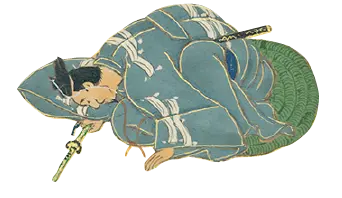
In preparation for the Kan’ei Gyoko Procession Reenactment, to be held on December 6 as part of the Kan’ei Gyoko 400th Anniversary Festival, the first etiquette training sessions for procession participants were held over two days, July 4 and 5.
The instructor was Kiyomoto Ogasawara, Wakasoke (heir to the head family) of the Ogasawara-ryu tradition of mounted archery and etiquette. The Ogasawara family, which also had close ties to Emperor Go-Mizunoo’s Imperial Visit in Kan’ei 3 (1626), has passed down the traditions of samurai etiquette since the Kamakura period.
“The Ogasawara family was also involved in the Imperial Visit four hundred years ago, and I am deeply honored to take part once again in this historic procession,” said Ogasawara as he instructed the participants in traditional etiquette.
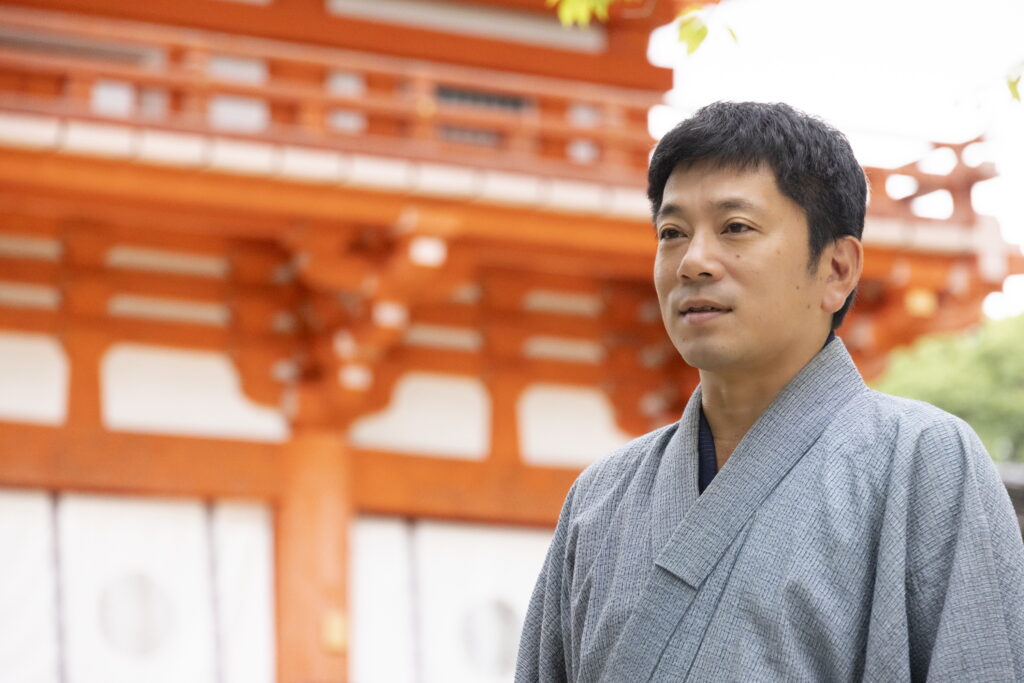
Etiquette Is Not a Technique for Appearing Graceful
The first lesson of the training was proper posture. Rather than forcing the head upward or thrusting out the chest, participants were taught to lengthen the back of the neck naturally and keep the head aligned with the spine. They were also instructed to relax their shoulders and hold their hands gently, maintaining a natural curve as though scooping up water.
Every movement has a reason behind it.
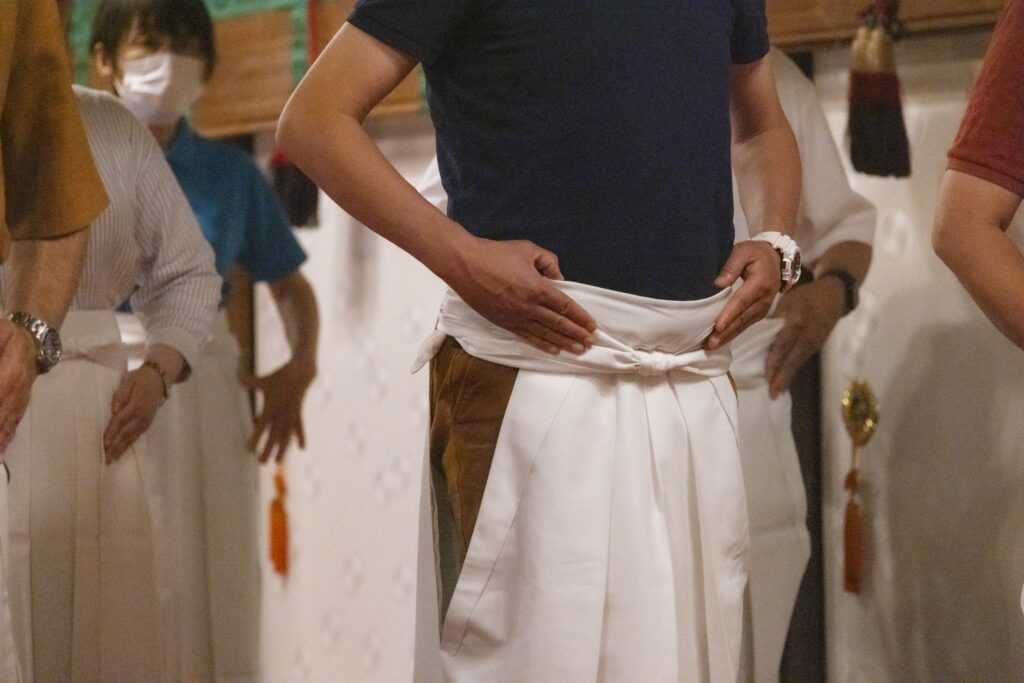
“In Japanese etiquette, bowing does not mean simply lowering the head. The head lowers naturally as a result of bending the body forward from the waist.”
With this explanation, Ogasawara repeatedly guided the participants through natural movements based on the structure of the human body, rather than having them merely imitate outward forms.
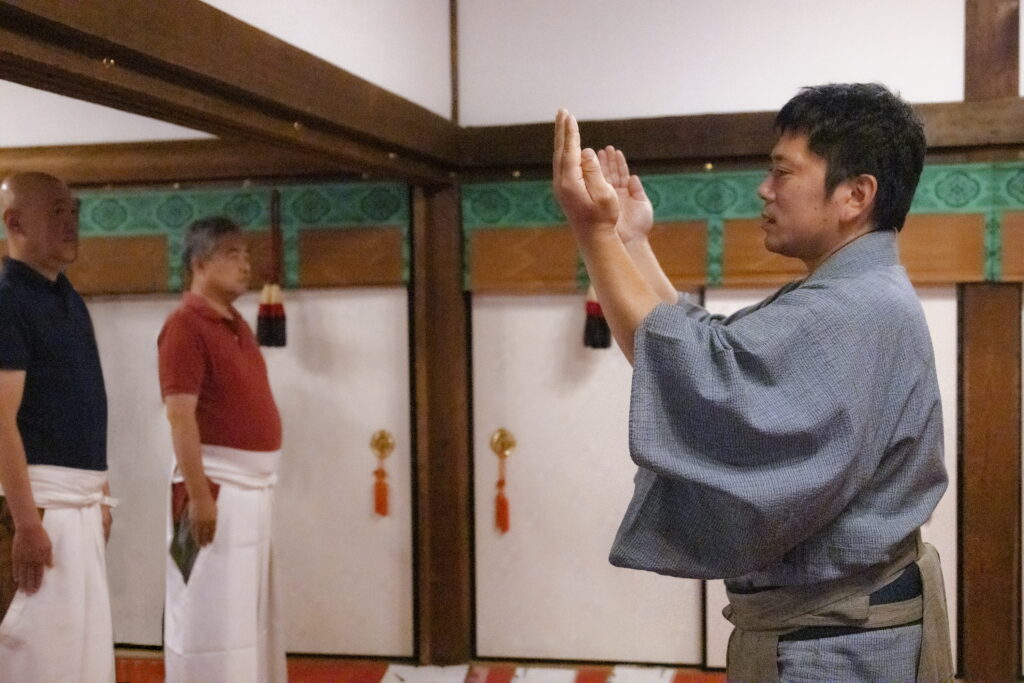
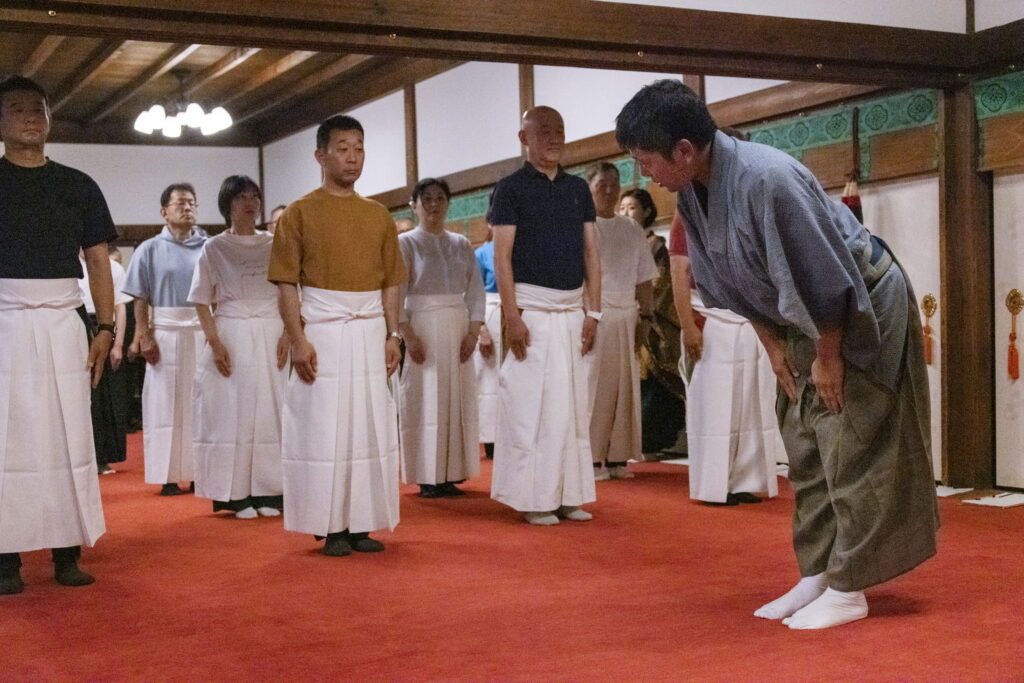
Another important lesson was the coordination of breathing and movement. Participants were taught to bend forward while inhaling, exhale, and then rise again while inhaling.
During an exercise in which participants faced one another and exchanged bows, they were introduced to an Ogasawara-ryu principle: “By synchronizing your breathing with the other person, even two people meeting for the first time can naturally move together in harmony.”
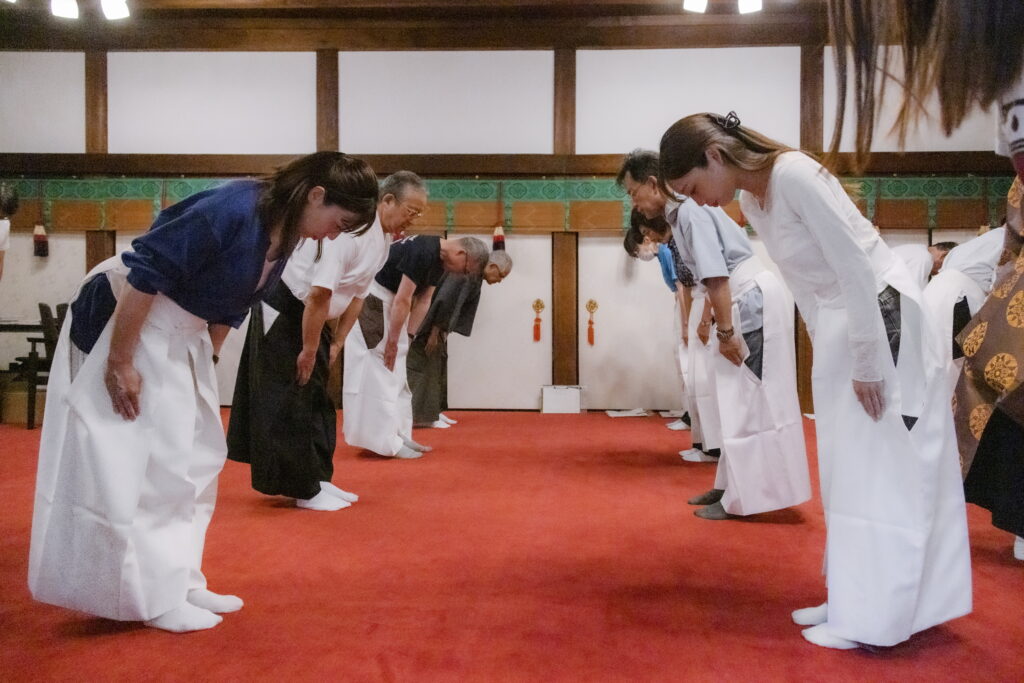
“Movement Within Stillness”
In explaining how to stand, Ogasawara introduced the concept of seichudo, or “movement within stillness.” Even when a person appears to be standing quietly, there should be an inner readiness to move at any moment. For this reason, he explained, it is important not to place one’s weight solely on the heels, but to maintain a balanced position from which one can begin walking at any time.
During the walking practice, participants carefully reviewed such points as moving each foot straight forward and maintaining the body’s central axis while walking. These movements are essential to creating a sense of beauty and harmony throughout the procession as a whole.
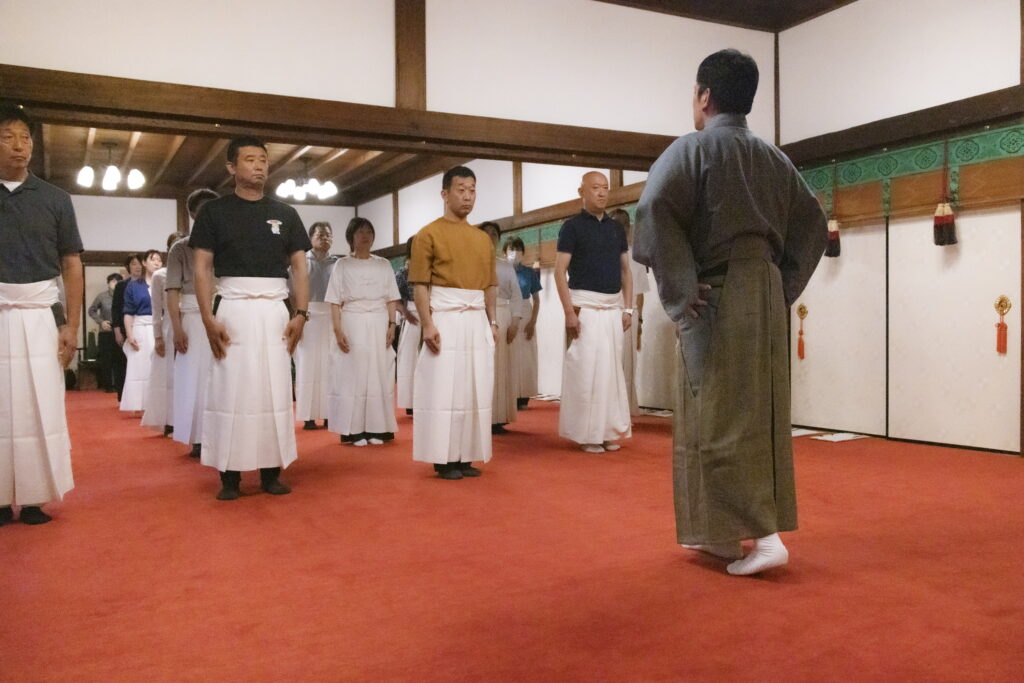
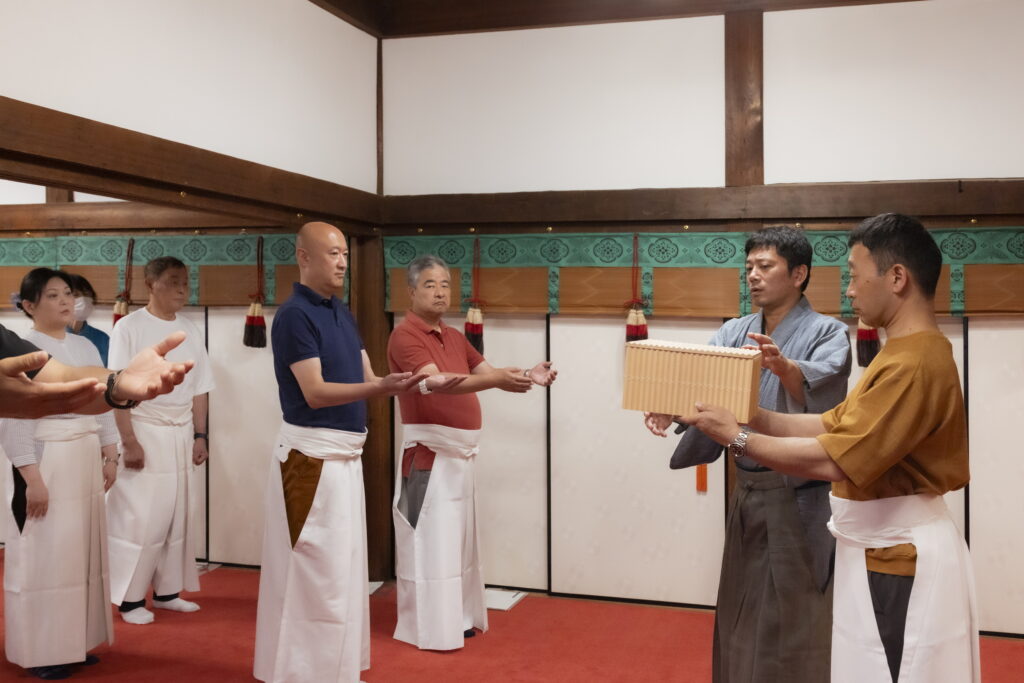
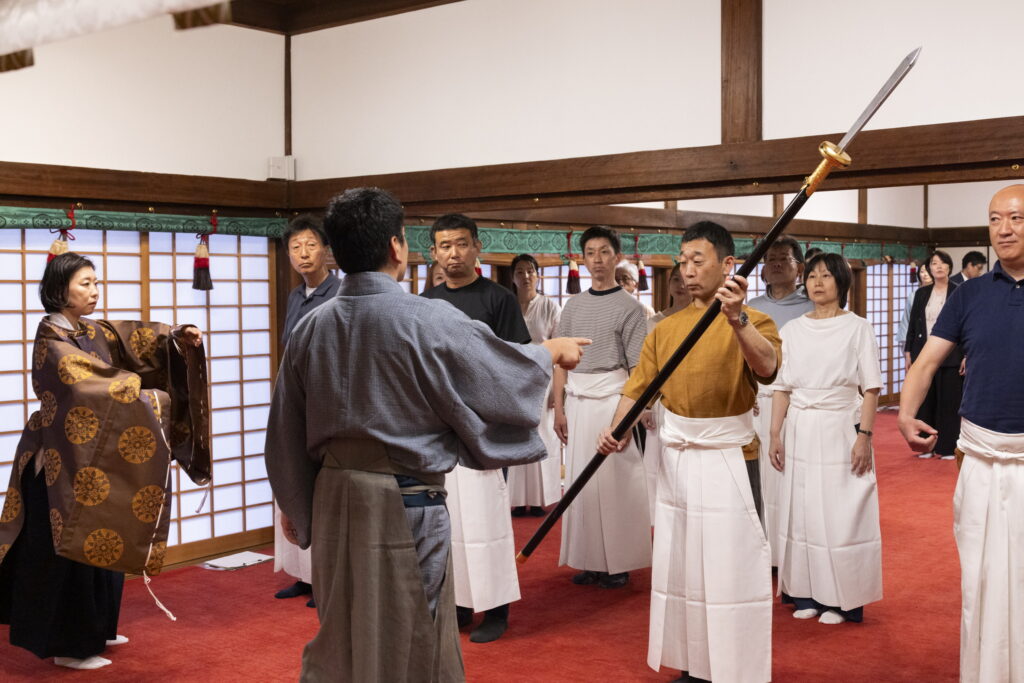
At the end of the training session, Ogasawara shared the following thoughts with the participants:
“This procession aims to recreate not only the appearance of the people who lived four hundred years ago, but also their ways of thinking and the spirit with which they lived. If we can faithfully recreate even the way they walked, directed their gaze, and carried themselves, I believe this will become a truly historic procession.”
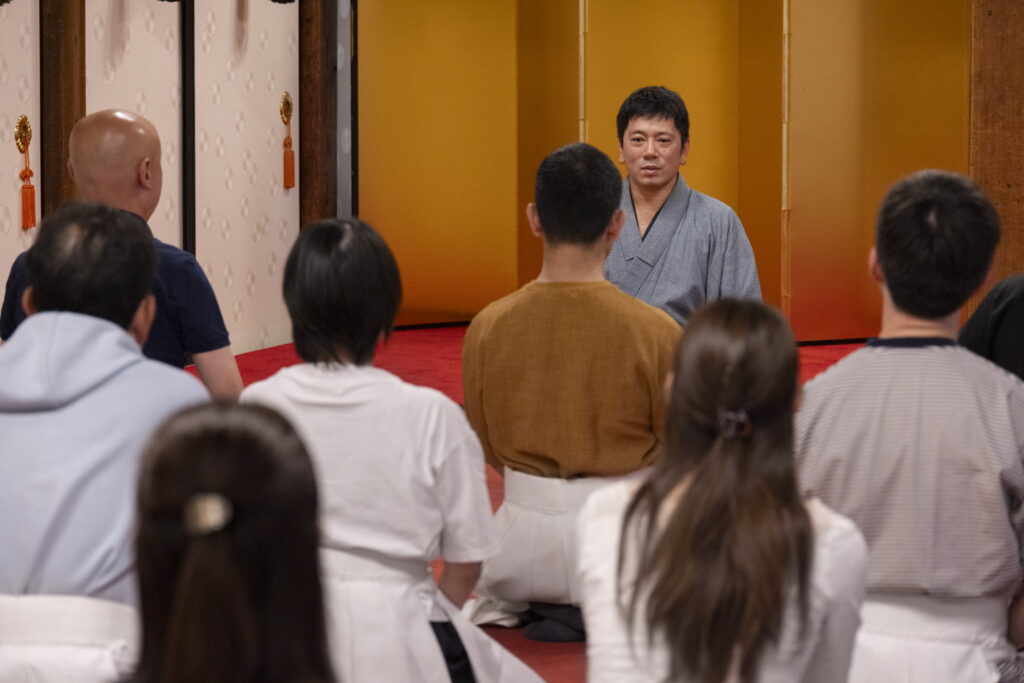
The Kan’ei Gyoko 400th Anniversary Festival aims to create something more than a parade of people dressed in historical costumes. Each participant will embody the courtesy and respect for others that were valued in Kyoto four hundred years ago, carrying that spirit forward into the present day.
In the months ahead, preparations will continue for the procession on December 6, including several further etiquette training sessions. We hope you will look forward to the day when the magnificent Imperial procession of four centuries ago is brought to life once more, imbued with the spirit of each and every participant.
Photography: BOW PLUS KYOTO Co., Ltd.