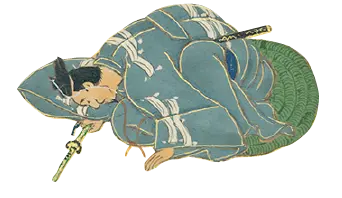
On July 25, “The Kan’ei Gyoko and Noh: Cultural Diplomacy That Brought the Age of Warring States to a Close” was held at the 14th KITA Roppeita Memorial Noh Theatre, organized by the Shibuya UNESCO Association and the Chuo City UNESCO Association.
The event began with a presentation by Kanako Hamasaki, Producer of the Kan’ei Gyoko 400th Anniversary Festival Executive Committee. This was followed by a shimai (a short Noh dance excerpt) from “Genji Kuyo” and a hannoh (an abbreviated form of Noh) performance of “Kumasaka,” both of which were among the works performed during the Kan’ei Gyoko.
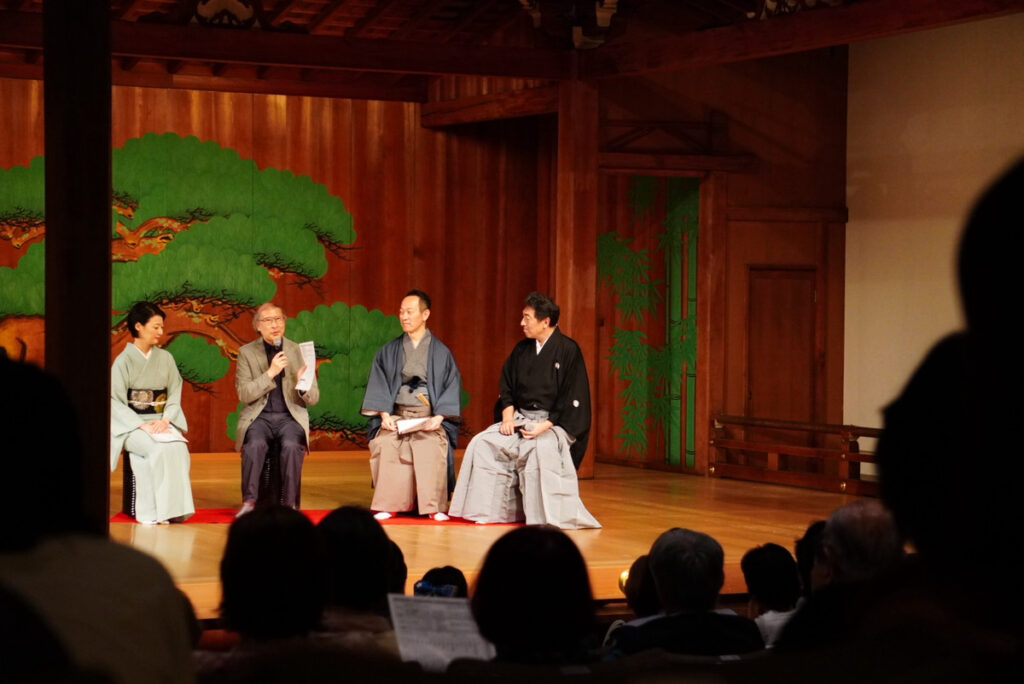
A panel discussion followed, featuring Shimpei Matsuoka, Professor Emeritus at the University of Tokyo and a scholar of Noh; Keiichiro Kaneko, a shite actor of the Kita school of Noh; Tadahiro Konoe, Chairman of the 14th Roppeita Memorial Foundation; and Kanako Hamasaki. Drawing on a range of perspectives, the panelists discussed the lasting impact of the Kan’ei Gyoko on the history of Noh in Japan.
“Culture Shapes Society”
Producer Kanako Hamasaki on the Kan’ei Gyoko 400th Anniversary Festival
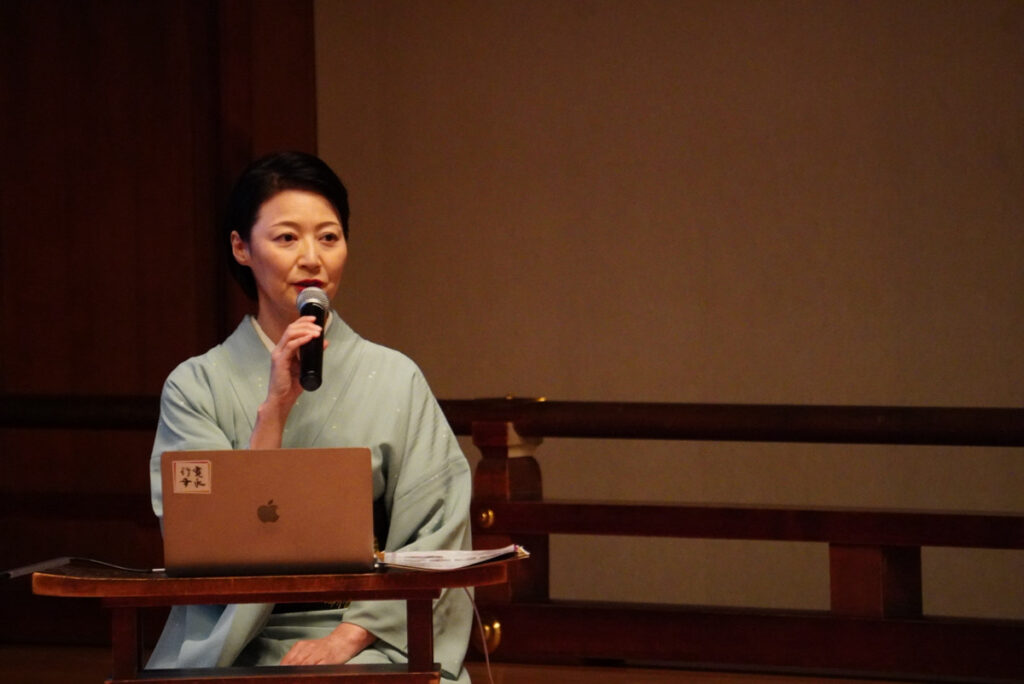
At the beginning of the event, Kanako Hamasaki, Producer of the Kan’ei Gyoko 400th Anniversary Festival Executive Committee, introduced the aims of the project.
She explained that the Kan’ei Gyoko (Imperial Visit by the Emperor), held in Kan’ei 3 (1626), was a major state-sponsored cultural undertaking in which Emperor Go-Mizunoo was welcomed to Nijo Castle and entertained with some of the finest cultural arts of the time, including bugaku, Noh, and waka poetry.
She went on to explain that the purpose of the 400th Anniversary Festival is not simply to look back on the Kan’ei Gyoko as a historical event, but to carry into the present day the spirit of the Kan’ei era—the belief that “culture shapes society.”
A Noh Program from Four Centuries Ago, Performed in a Noh Theatre Four Centuries Later
The performances that followed were the shimai “Genji Kuyo,” performed by Teruhisa Oshima, a shite actor of the Kita school of Noh, and the hannoh “Kumasaka,” performed by Keisuke Shiotsu, also a shite actor of the Kita school. Both works were actually performed during the Kan’ei Gyoko by Kita Shichidayu, later known as Kita Shichidayu Osayoshi.
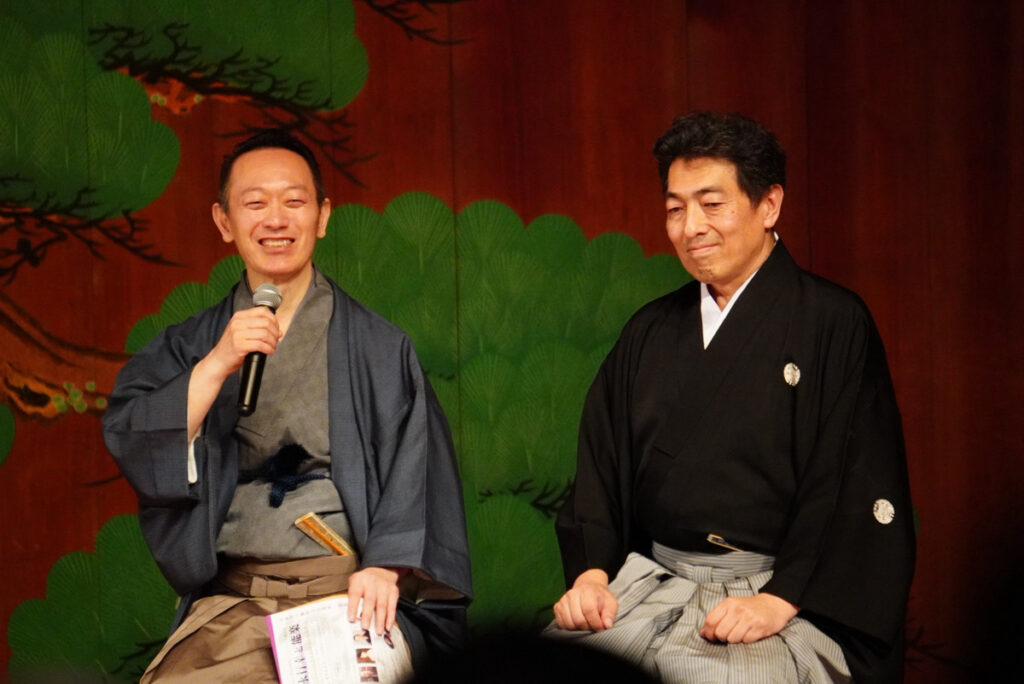
Keiichiro Kaneko, a shite actor of the Kita school, explained that “Genji Kuyo” is based on a medieval tale in which Murasaki Shikibu is said to have fallen into hell for writing the fictional Tale of Genji. The work offers prayers for the repose of her soul through dance. Kaneko also noted that people at the time believed that “fine dance and song had the power to purify the human heart,” illustrating the close relationship between the performing arts and religious belief in the spiritual culture of medieval and early modern Japan.
“Kumasaka,” by contrast, is a dynamic work depicting the battle between the notorious robber Kumasaka Chohan and the young Ushiwakamaru. “Noh is often thought of as a quiet and restrained performing art, but ‘Kumasaka’ is highly entertaining and a great pleasure to watch,” Kaneko explained. He also reflected on why such a work may have been chosen for the Kan’ei Gyoko, a particularly auspicious and celebratory occasion.
How the Kan’ei Gyoko Changed the History of Noh
In the first half of the panel discussion, the participants, led by Shimpei Matsuoka, discussed the impact of the Kan’ei Gyoko on the history of Noh in Japan.
Referring to the program presented during the Kan’ei Gyoko—“nine Noh plays and seven kyogen plays, making seventeen works in all when Okina is included”—Matsuoka explained, “A Noh program of such scale and substance was unprecedented at the time.” His remarks conveyed the extraordinary scale of the Kan’ei Gyoko as a major state-sponsored cultural undertaking.
Matsuoka also noted that the program performed on the day did not proceed exactly as originally planned. Works were added or changed at the request of Tokugawa Hidetada, the retired shogun known as the Ogosho. The fact that the former shogun, who remained the de facto holder of supreme political authority, was personally involved in shaping the program demonstrates the important role Noh played in connecting politics and culture.
The discussion then turned to Kita Shichidayu, the Noh actor who attracted particular attention during the event. Matsuoka described Shichidayu as “a superstar of his time,” explaining that the high acclaim for his exceptional artistry later became a major impetus for the establishment of the Kita school of Noh. The panel also noted that the venue for this event is itself closely associated with the Kita school, making it a particularly symbolic setting in which to explore the Kan’ei Gyoko.
The Historical Significance of Emperor Go-Mizunoo Watching Noh Performances
One of the most striking topics in the panel discussion was the historical significance of Emperor Go-Mizunoo having the opportunity to watch Noh performed by professional actors. Matsuoka explained that, since the medieval period, there had long been a convention that professional sarugaku performers were not to be admitted into the Imperial Palace.
Opportunities for the Emperor to watch full-scale professional Noh performances were therefore extremely limited, and the Kan’ei Gyoko marked a major turning point in this history. Emperor Go-Mizunoo’s viewing at Nijo Castle of full-scale Noh presented by the shogunal family marked an important step in Noh’s development beyond the realm of samurai culture toward recognition as a performing art representative of Japan.
At the same time, the Tokugawa Jikki records this Noh performance as a “private matter.” Matsuoka interpreted this description as evidence of the delicate political considerations involved at the time, as those concerned sought to establish a new cultural order while accommodating established conventions of the Imperial Court.
Seen in this light, the day of Noh performances held at Nijo Castle four centuries ago was far more than an occasion for entertainment. It was also a historic moment when the Imperial Court and the Tokugawa Shogunate shared the culture of a new era and presented a new form of Japanese culture.
Across Four Centuries, Carrying Culture into the Future
The Kan’ei Gyoko 400th Anniversary Festival does not seek simply to look back nostalgically on history. Four centuries ago, cultural traditions from across Japan converged in Kyoto, where they were refined before spreading once again throughout the country. In the same way, culture today can bring people and regions together and create new value. The festival seeks to reconsider this enduring role of culture through the history of the Kan’ei Gyoko. At the conclusion of the panel discussion, each speaker shared, from their own perspective, the message that the Kan’ei Gyoko 400th Anniversary Festival seeks to carry into the future.
Reflecting on the program performed during the Kan’ei Gyoko, Kaneko suggested that it was not simply a presentation of the performing arts, but a carefully structured program intended to show the Emperor what Noh was and what it represented.
“Okina has the significance of purifying the place and creating a ceremonial space. Beginning with Okina and continuing through a variety of works, the program may have been designed to show the Emperor, ‘This is what Noh is.’ Over the past four centuries, Noh has been passed down through its connections with the rulers and townspeople of each era, as well as with its audiences. I am deeply moved by the fact that Noh theatres still remain today and that Noh continues to be performed in them.” (Kaneko)
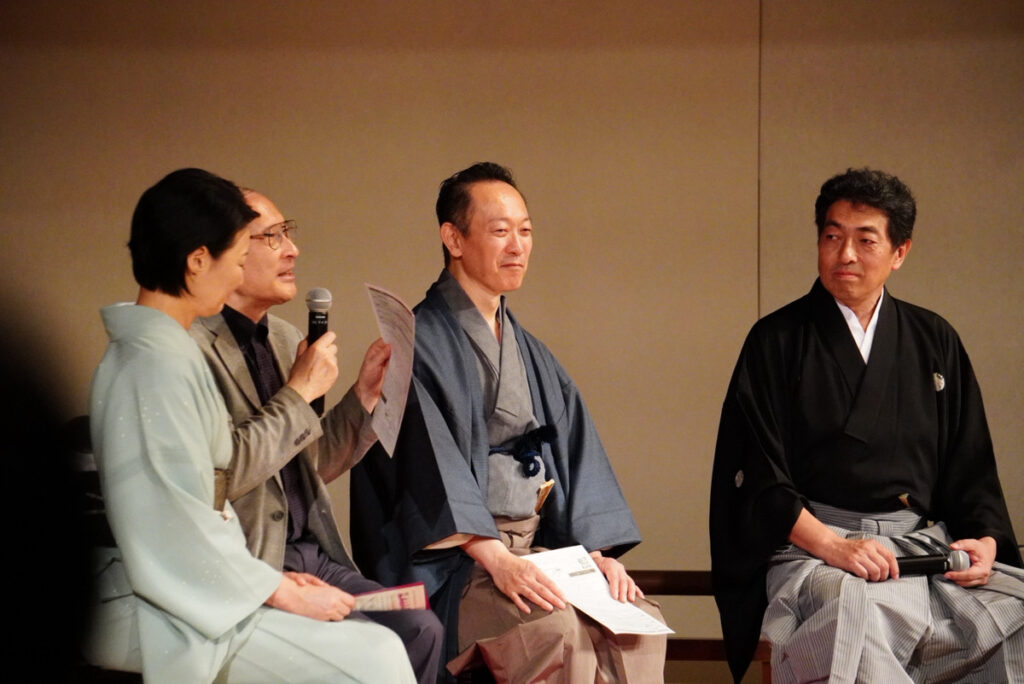
Matsuoka then observed that the history of Noh is also a history of people from different social backgrounds coming together and creating new forms of culture.
“The encounter of Zeami and Kan’ami with Ashikaga Yoshimitsu was a major event in the history of Japanese culture. New forms of culture emerged through interactions between people of different social positions, from the upper and lower strata of society. I believe it is precisely this dynamism that makes Noh so compelling.” (Matsuoka)
Matsuoka also discussed the patronage of Noh by the Tokugawa Shogunate, noting that it was not simply a system that provided performers with a livelihood, but one that fostered competition among the different schools and encouraged them to refine their artistry. He also referred to the diverse figures who shaped Kan’ei Culture, including Hon’ami Koetsu, Tawaraya Sotatsu, and Kobori Enshu.
“There are still many fascinating aspects of Kan’ei Culture that deserve further study. I found the discussion so stimulating that I feel I have discovered a new subject for my own research.” (Matsuoka)
Producer Hamasaki emphasized that the Kan’ei Gyoko 400th Anniversary Festival is not simply an occasion to celebrate a 400-year milestone, but a new point of departure toward the future.
“It is because cultural traditions have been passed down to us over the past four centuries that we are able to enjoy such cultural richness today. That is why it is important for us to consider what we will preserve and what we will pass on ten, twenty, or even one hundred years from now. Milestones offer us opportunities for new awareness. As we cherish these four hundred years together, I hope we can also consider what we will build and pass on to the next era, and shape that future together.” (Producer Hamasaki)
Finally, Tadahiro Konoe concluded the day’s discussion with the phrase, “cultural diplomacy for peace and a better future.”
Experiencing works performed four centuries ago, learning about the history and ideas behind them, and carrying their legacy into the future—“Kan’ei Culture and Noh” at the Kita Noh Theatre offered visitors a valuable opportunity to discover the depth and richness of Kan’ei Culture through Noh, one of Japan’s most representative performing arts. It also conveyed to each visitor the spirit of four centuries ago: the belief that “culture shapes society.”