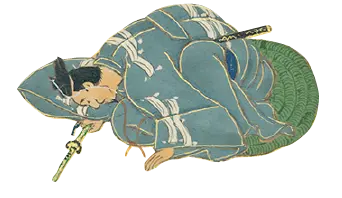
Exactly 400 years have passed since the Kan’ei Gyoko of September 6, 1626.
On September 6, 2026, the Kan’ei Gyoko 400th Anniversary Commemorative Noh Performance was held at the Kongo Noh Theatre.
During the Kan’ei Gyoko, five days of entertainment were presented at Nijo Castle, including Noh, bugaku (court dance accompanied by gagaku music), and waka poetry. Noh played a particularly important role. Historical records tell us that Emperor Go-Mizunoo and Tokugawa Iemitsu sat side by side to watch Noh performances on a stage erected in the Ninomaru Garden. Rather than simply recreating these historical events, this commemorative performance was conceived as an attempt to bring the events of four centuries ago to life anew through Noh in the present day.
Before the performance of the new Noh work, Tadahiro Konoe recreated the Kaiko (opening recitation) that was performed before the Noh presentation at Nijo Castle four centuries ago.
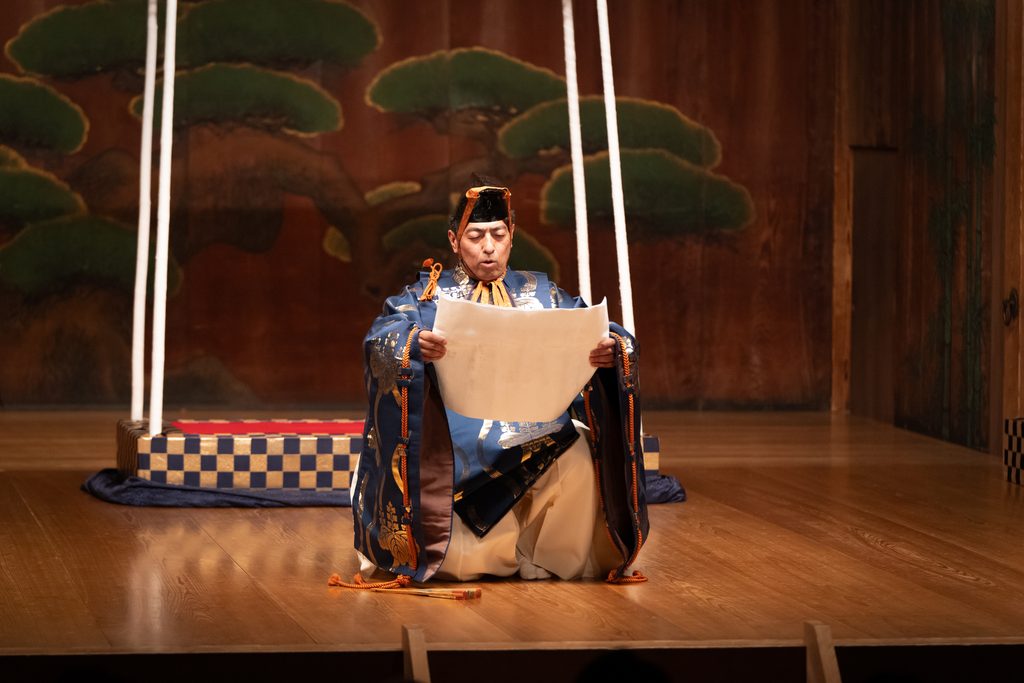
At the time, the Kaiko was performed by Shindo Kyuemon. Remarkably, there is a curious connection between Shindo Kyuemon, who performed it four centuries ago, and Tadahiro Konoe, who took on the role 400 years later. Shindo Kyuemon was then in the service of the Konoe family. Thus, the Kaiko performed four centuries ago by Shindo Kyuemon, a retainer of the Konoe family, was performed once again on the very same date 400 years later by Tadahiro Konoe of that same family. With this remarkable connection spanning four centuries, the performance began.
The new Noh work “Kan’ei Gyoko” portrayed the events of four centuries ago—when daimyo gathered from across Japan and harmony was achieved between the Imperial Court and the warrior class—on a magnificent scale, like a richly colored historical picture scroll brought to life on stage.
Tatsushige Kongo, Wakasoke (heir to the head family) of the Kongo school, performed the role of Emperor Go-Mizunoo. Kiyemon Hayashi XIV, head of the Hayashi family, one of the five Kyoto Kanze families, performed the role of Tokugawa Iemitsu, while Ryoichi Arimatsu performed the role of Tokugawa Hidetada.
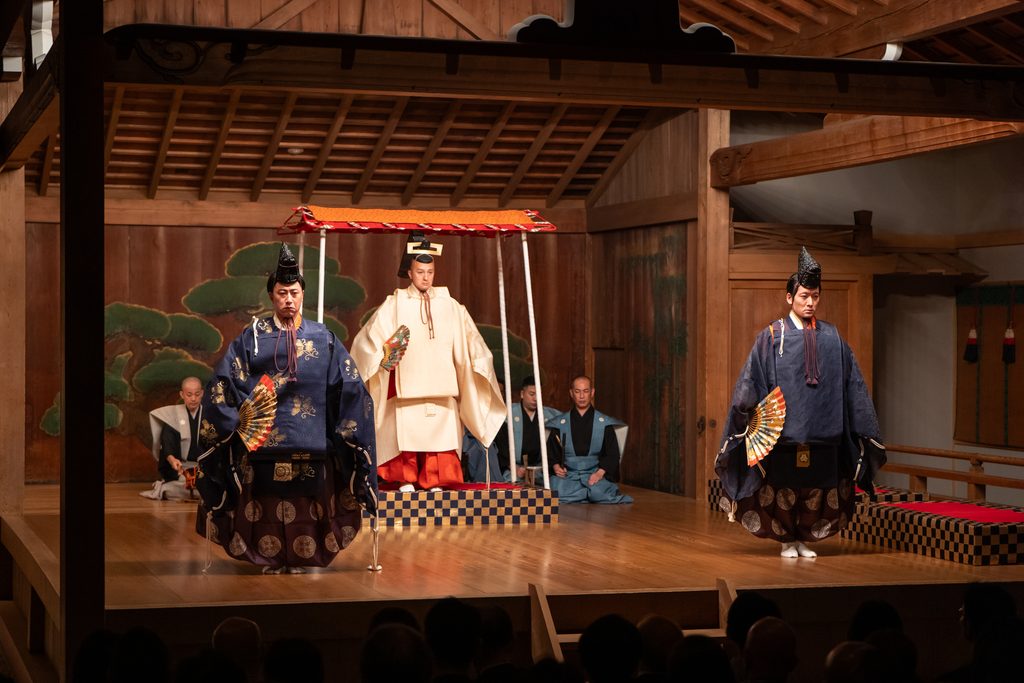
The stage was filled in turn by figures representing the Emperor, the shogun, court aristocrats, members of the warrior class, and sarugaku performers. The performance portrayed not only the splendor of the Imperial Visit, but also the five days of the Kan’ei Gyoko, during which the Imperial Court and the warrior class shared the same time and space through Noh.
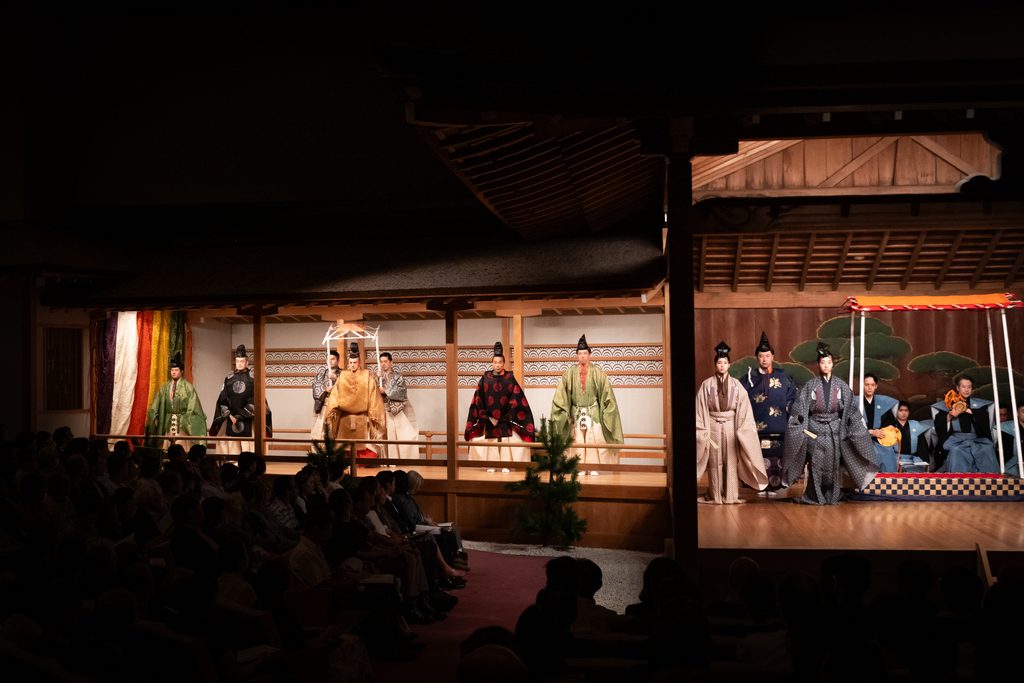
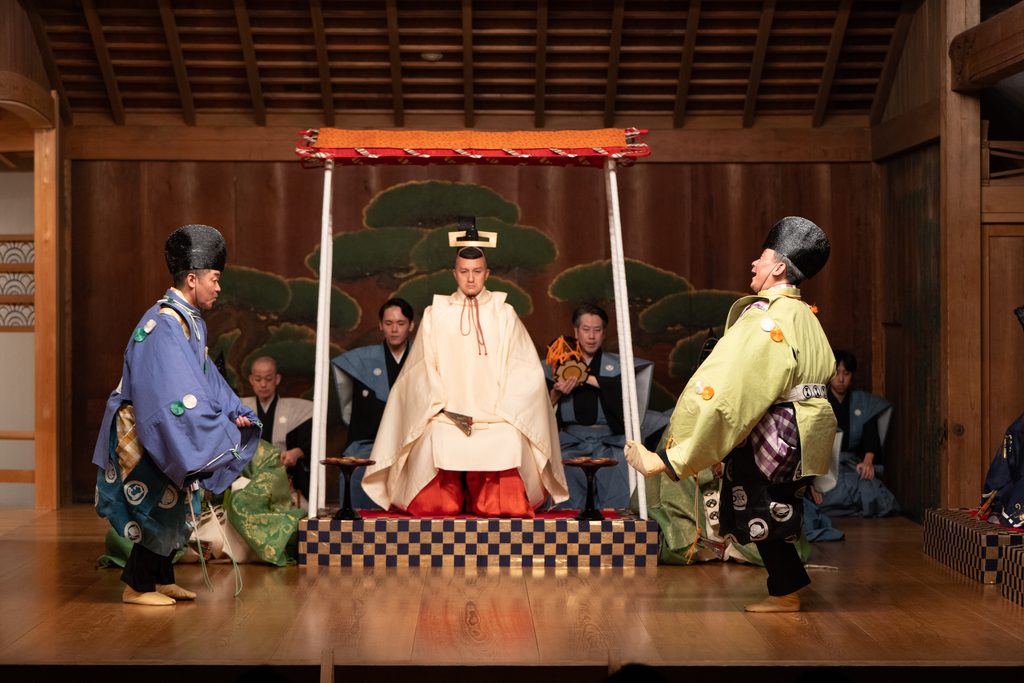
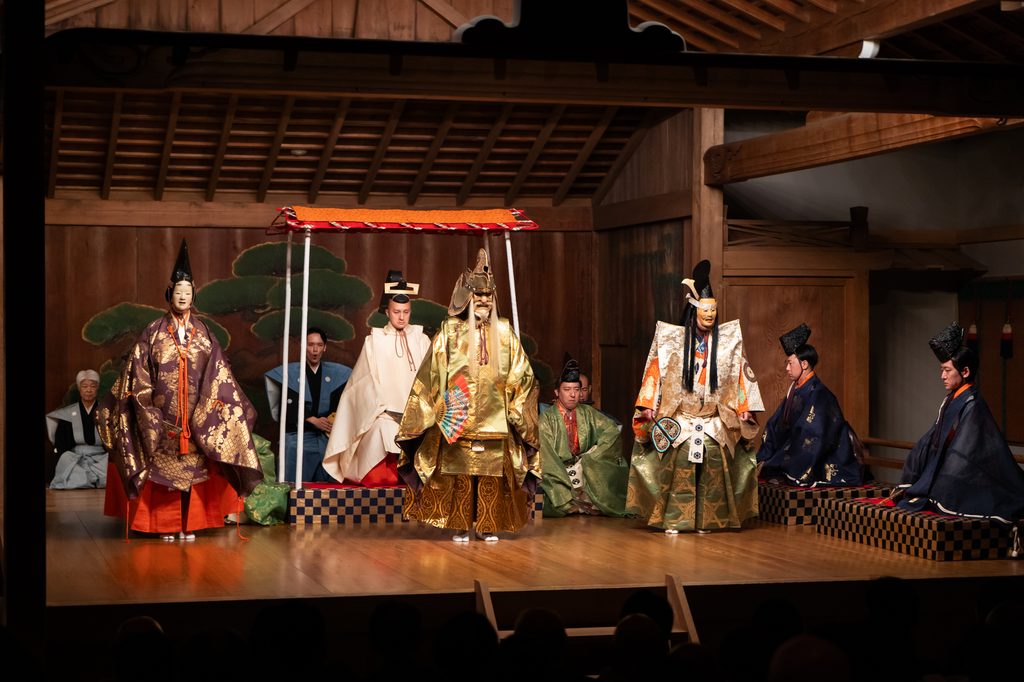
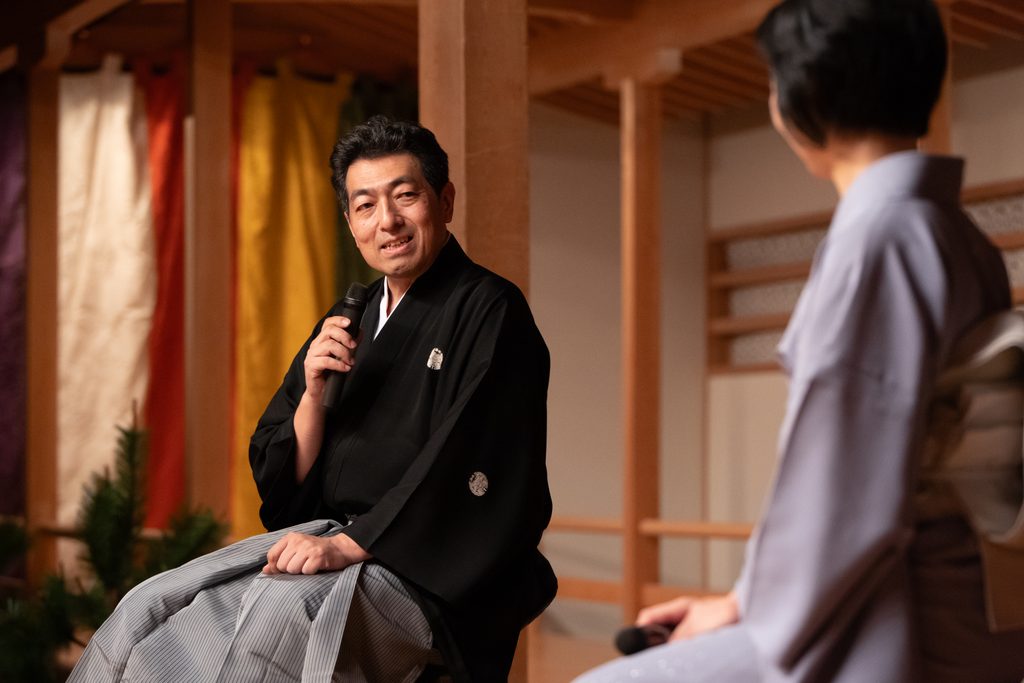
In the second half of the program, a cross-talk session was held between Tadahiro Konoe and Kanako Hamasaki, Executive Producer of the Kan’ei Gyoko 400th Anniversary Festival.
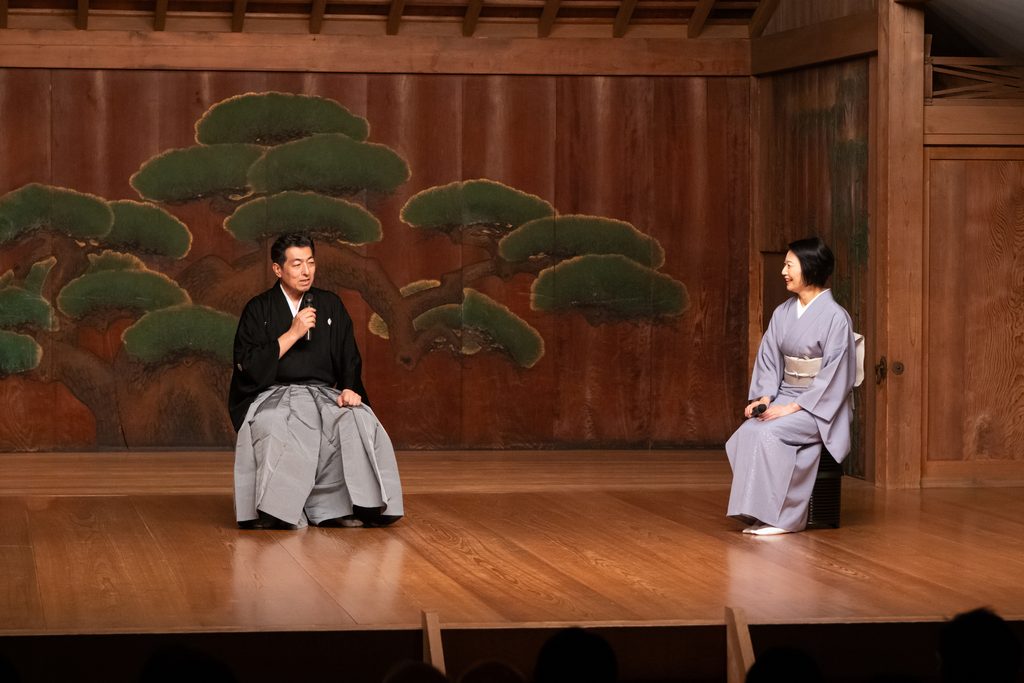
The discussion explored how the Kan’ei Gyoko, in which ancestors of the Konoe family were also involved, and the culture passed down over the ensuing four centuries might now be carried forward into the future. Through the creation and performance of the new Noh work “Kan’ei Gyoko,” Tadahiro Konoe and Kanako Hamasaki reflected on the aspirations embodied in this commemorative performance.
“Midare,” Performed Once Again After Four Centuries
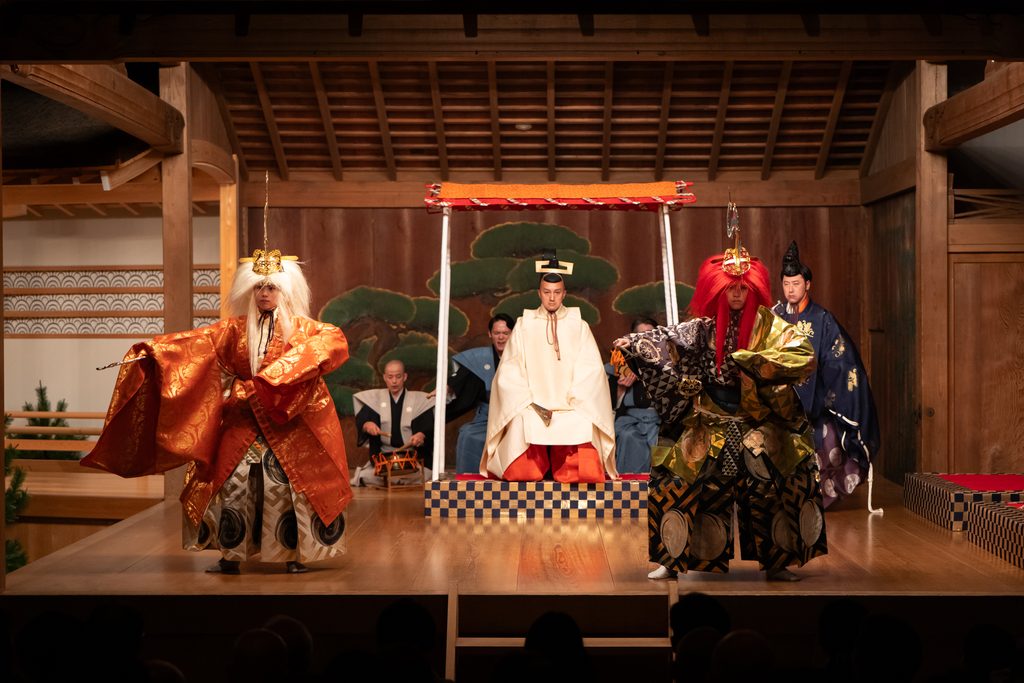
The performance concluded with the celebratory Noh piece “Midare: So-no-Mai.” “Midare” (recorded as “Shojo Midare” in accounts of the performance four centuries ago) is known to have been performed at Nijo Castle during the Kan’ei Gyoko.
For this performance, Tatsushige Kongo and Kiyemon Hayashi appeared as Shojo (mythical beings associated with sake and longevity). In an exceptionally rare So-no-Mai performance, the two shite actors—each carrying on the traditions of a different school, the Kongo and Kanze schools—performed “Midare” together on the same stage.
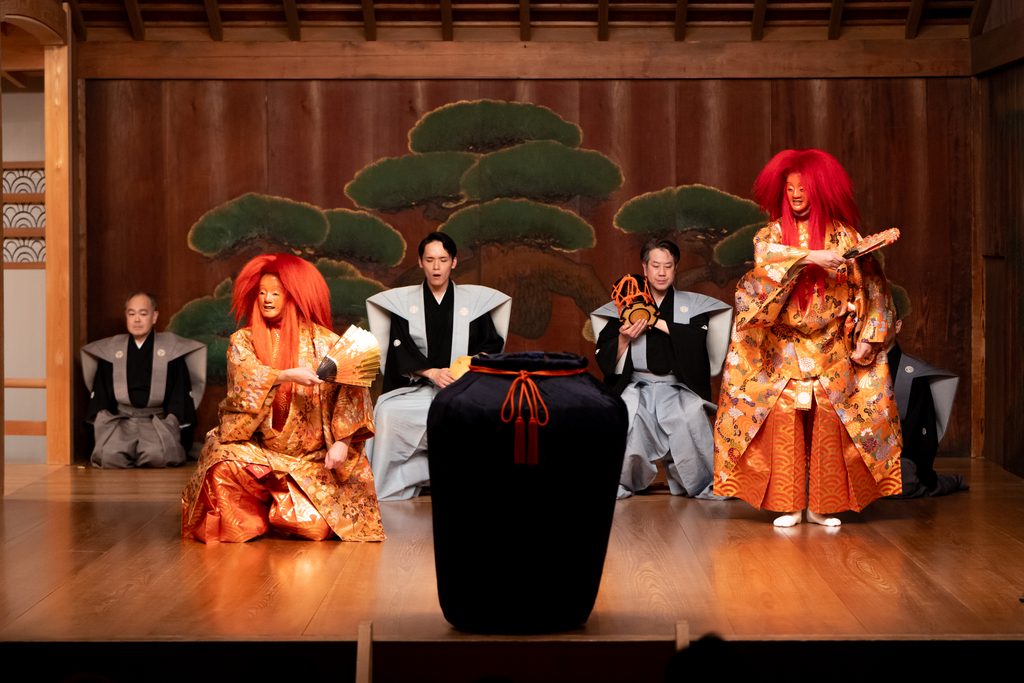
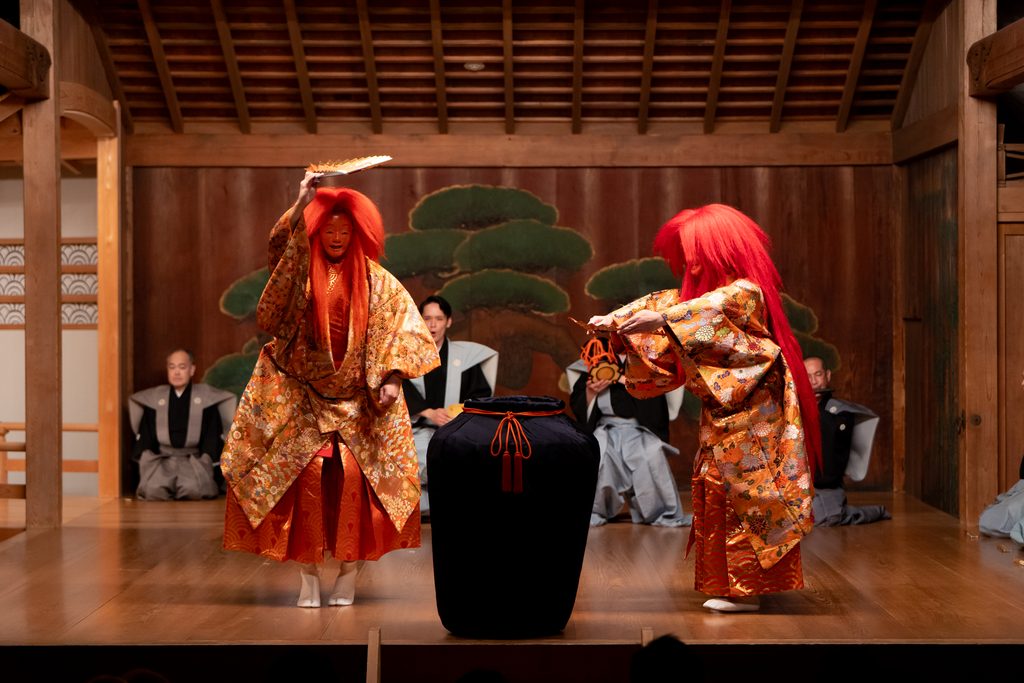
Four hundred years ago, Emperor Go-Mizunoo and the Tokugawa shogun watched “Midare” (“Shojo Midare”) at Nijo Castle. On the very same date four centuries later, the work was performed once again by two Noh actors from different schools, bringing the commemorative performance to a close.
Noh, chanoyu (the Japanese tea ceremony), waka poetry, ikebana (flower arrangement), crafts, and the many other cultural traditions that flourished during the Kan’ei era have been passed down from person to person. While changing in form over time, they continue to live on today. The creation of the new Noh work “Kan’ei Gyoko” is itself another chapter in this long tradition of cultural transmission. The work embodies the hope that, “a hundred years from now, when the 500th anniversary of the Kan’ei Gyoko is celebrated, this Noh will be performed once again.”
Rather than simply recreating the past, we can inherit history, create something new for our own time, and then pass it onward to the future. Just as Noh brought together the Imperial Court and the warrior class four centuries ago, the stage in 2026 once again became a place where culture connected people across different schools, positions, and eras.
We would like to express our heartfelt gratitude to everyone who performed and contributed to this production, and to all those who joined us at the theatre and witnessed this historic 400th-anniversary performance together with us.
Photography: Jun Hitomi