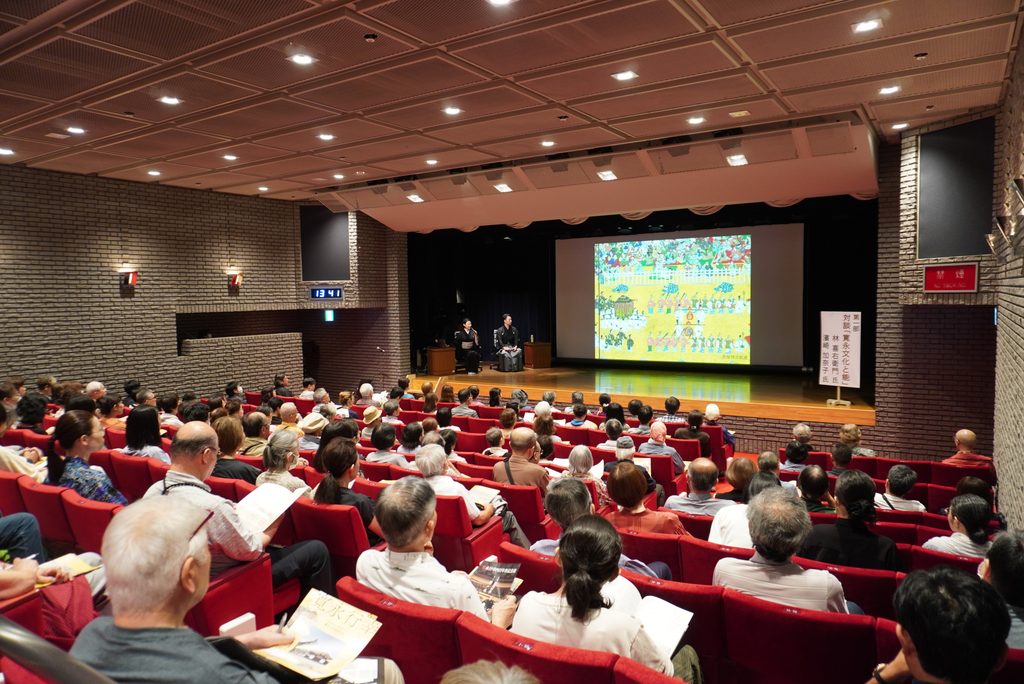
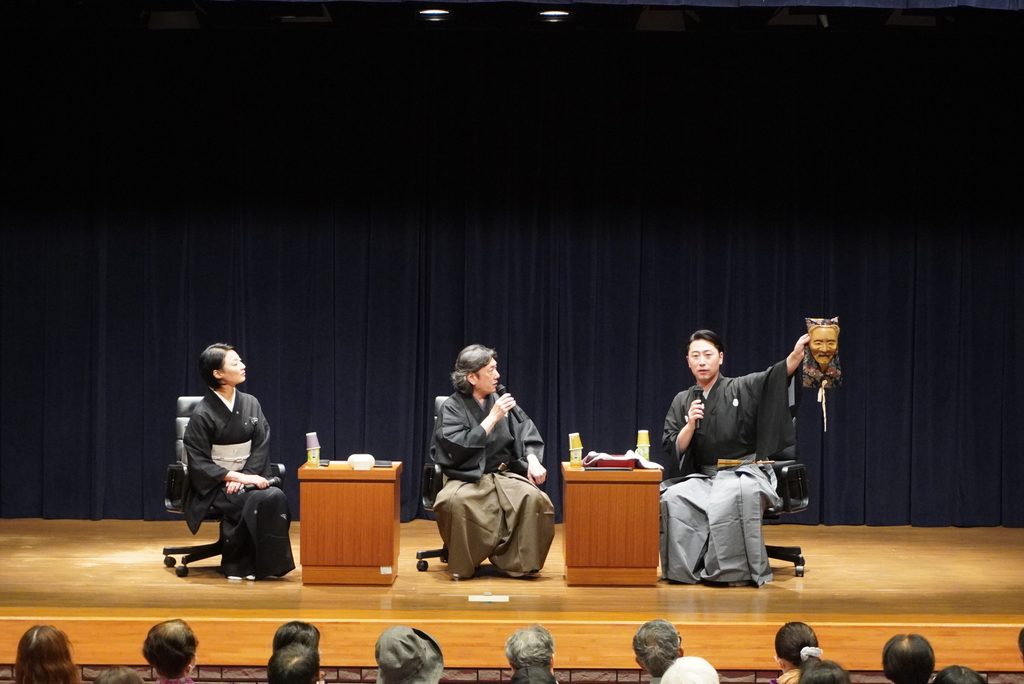
On August 29, 2026, the commemorative lecture “Kan’ei Culture and Noh” was held at the Sendai City Museum as part of the Kan’ei Gyoko 400th Anniversary Festival.
In 1626 (Kan’ei 3), Emperor Go-Mizunoo made the Kan’ei Gyoko (Imperial Visit by the Emperor) to Nijo Castle at the invitation of the Tokugawa Shogunate. This historic occasion, which brought the Emperor and the shogun together in one place, was also attended by leading daimyo from across Japan. Among them was Date Masamune, founder of the Sendai Domain.
For this commemorative lecture, we welcomed Kiyemon Hayashi XIV of the Kyoto Kanze Hayashi family from Kyoto.
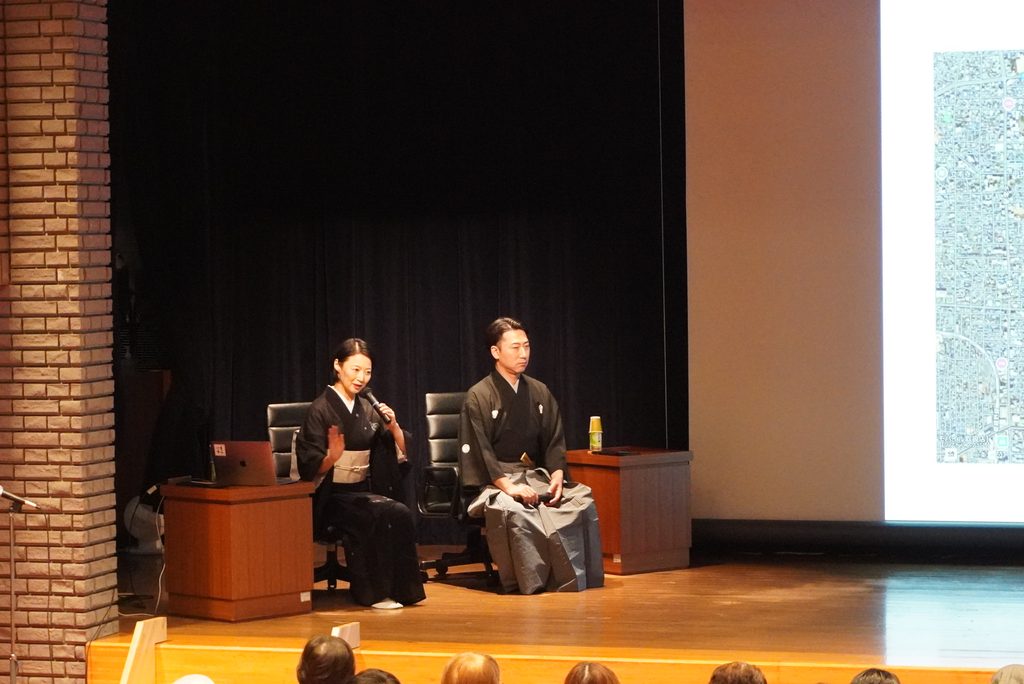
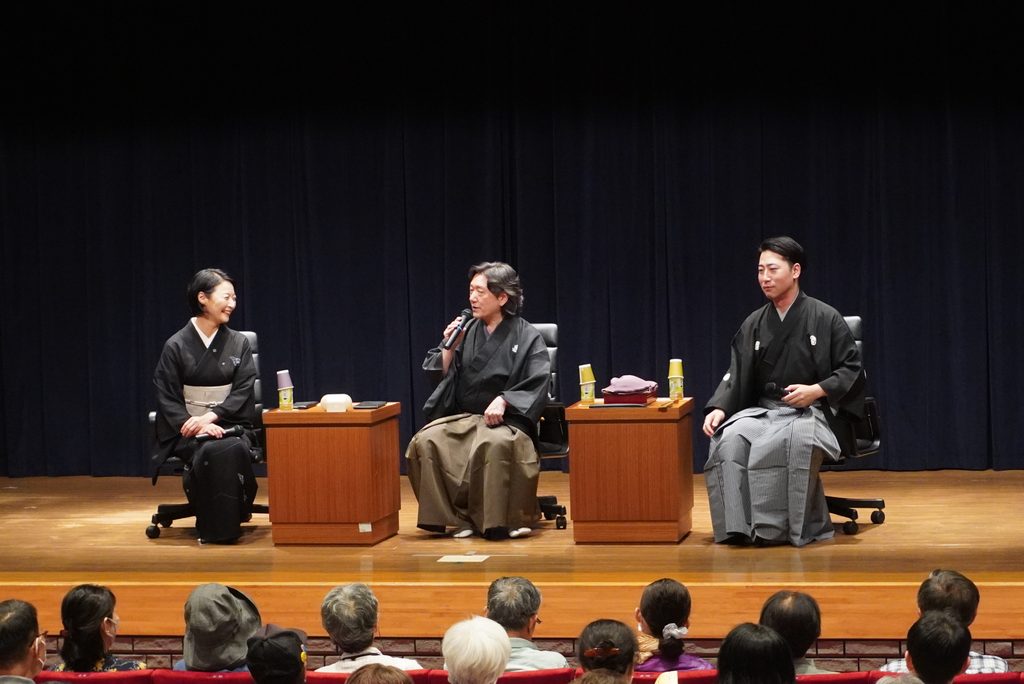
The first part of the program featured a conversation between Hayashi and Kanako Hamasaki, Executive Producer of the Kan’ei Gyoko 400th Anniversary Festival.
In the second part, Hayashi and Kasho Yamanaka, a Kanze-school shite actor originally from the Kansai region and now based in Sendai, performed the shimai (a short Noh dance excerpt) “Sanemori.”
The third and final part brought the three participants together for a cross-talk session exploring the connections between Kan’ei Culture, Noh, and Date Masamune.
We would like to express our sincere appreciation to the many people who joined us despite the inclement weather.
A Four-Century Connection Between Date Masamune and the Hayashi Family
For the family of Kiyemon Hayashi XIV, who served as a lecturer at this event in Sendai, the Kan’ei Gyoko holds special significance.
According to Hayashi, the Kan’ei Gyoko is thought to have been one of the events that led the Hayashi family to establish Noh as its hereditary profession.
One connection between the Hayashi family and Date Masamune, founder of the Sendai Domain, has endured to the present day: the Hayashi family crest.
The design of the family crest is said to derive from suhama dango, a type of confectionery presented by the Hayashi family to Date Masamune when he traveled to Kyoto for the Kan’ei Gyoko, and the “silver spheres” that Masamune bestowed upon the family in return.
Four centuries ago, Date Masamune traveled to Kyoto and took part in the Kan’ei Gyoko. The Hayashi family commemorated its connection with Masamune in its family crest and has passed that legacy down to the present day.
For Kiyemon Hayashi XIV to visit Sendai, once Masamune’s base, and speak about the Kan’ei Gyoko and Noh was therefore more than an opportunity to introduce the historic Imperial Visit that took place in Kyoto. It also offered an opportunity to renew in the present day the four-century connection between Kyoto and Sendai that was forged through that historic event.
Date Masamune and His Love of Noh
Date Masamune was known not only as a warrior and daimyo, but also as a man with a deep appreciation for a wide range of cultural pursuits, including Noh, waka poetry, chanoyu (the Japanese tea ceremony), and incense.
Noh also played an important role in the Kan’ei Gyoko. At Nijo Castle, in the presence of Emperor Go-Mizunoo, a total of seventeen pieces were performed: nine Noh plays and seven kyogen plays, together with “Okina.”
In the second part of this commemorative lecture, Kiyemon Hayashi XIV and Kasho Yamanaka performed the shimai (a short Noh dance excerpt) “Sanemori.”
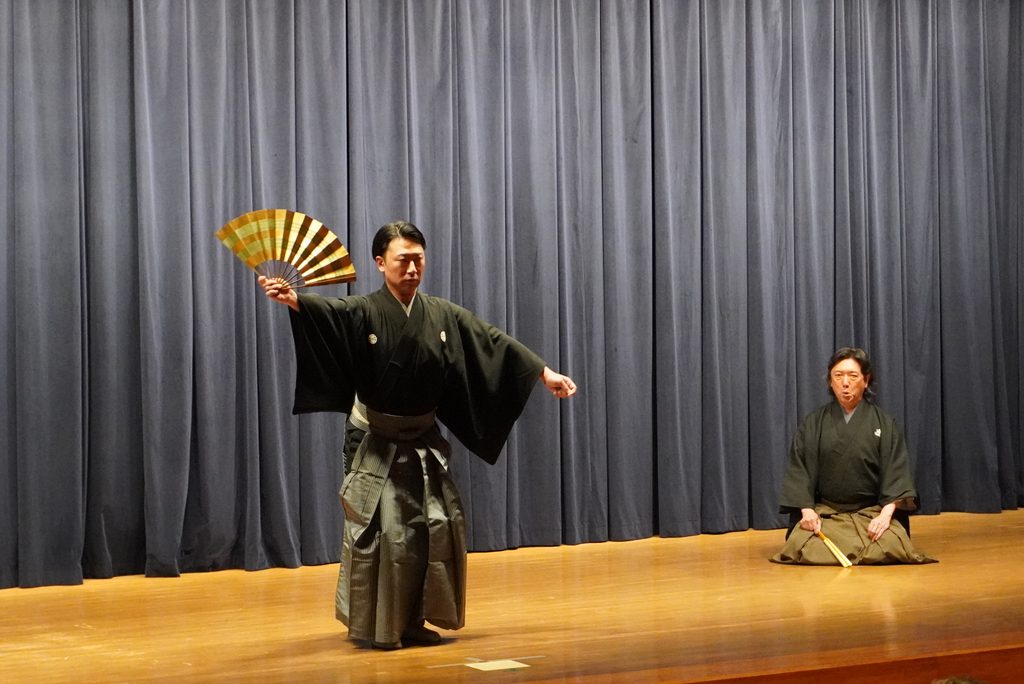
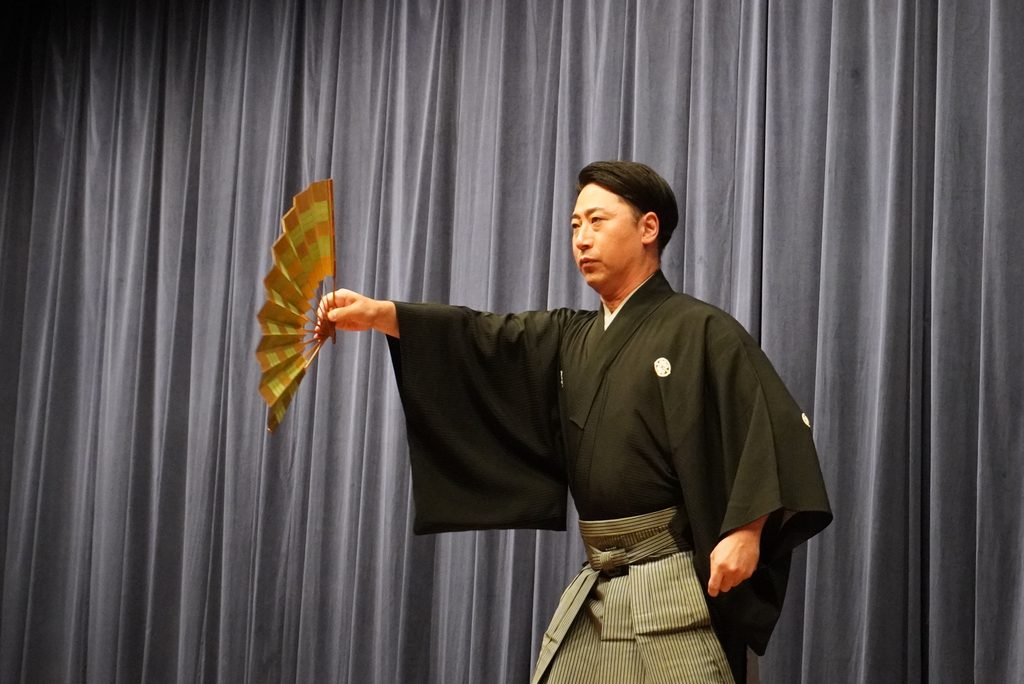
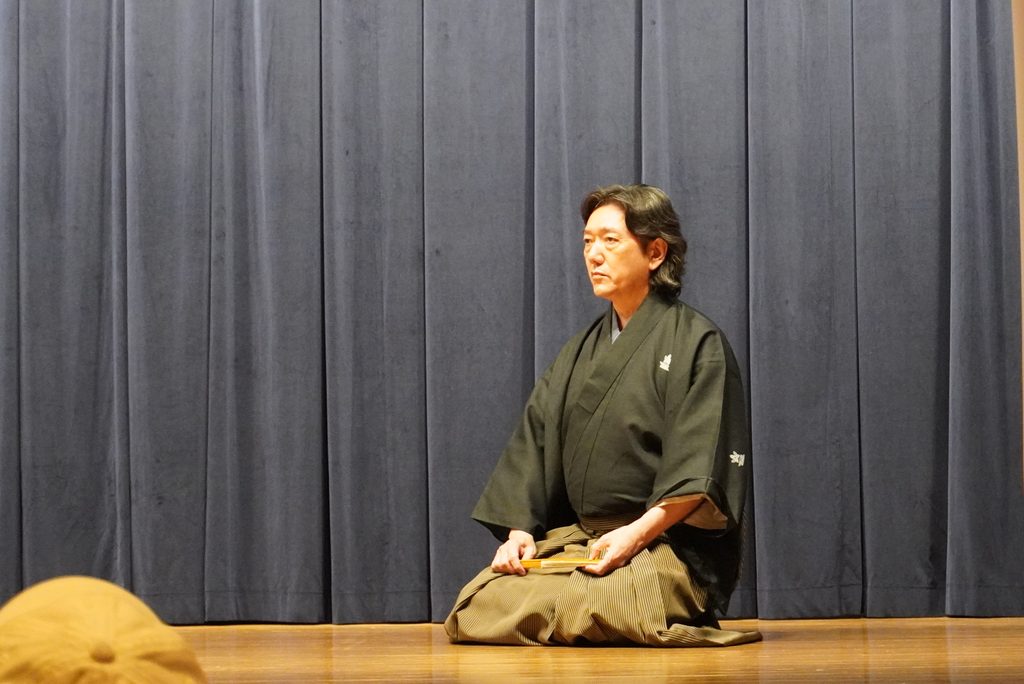
For the warriors who lived through the age of civil war, Noh was more than mere entertainment. Its stories of warriors confronting life and death, old age, pride, attachment, and the repose of the dead may well have resonated deeply with their own experiences.
One episode involving Date Masamune and the Noh play “Sanemori” seems to symbolize this connection.
The Significance of Performing “Sanemori” in Sendai
In the third part of the program, Kiyemon Hayashi XIV, Kasho Yamanaka, and Kanako Hamasaki took part in a cross-talk session. At the heart of the discussion was Yamanaka’s lively, humorous account of Masamune’s deep love of Noh, delivered with such vividness that it seemed as though he had witnessed the events himself. His storytelling brought great enthusiasm to the audience.
Records show that ten Noh plays, including “Sanemori,” were performed at Wakabayashi Castle in 1631 (Kan’ei 8), and it is believed that Masamune may also have attended the performance.
“Sanemori” is a Noh play centered on Saito Betto Sanemori, a warrior of the late Heian period. Although already advanced in age, Sanemori went into battle for one final fight. Ashamed at the thought of being scorned by younger warriors for his age, he is said to have dyed his white hair black with ink and entered his final battle with a youthful appearance.
According to the “Masamune-ki,” written by Date Shigezane, Masamune was moved to tears by the figure of Sanemori portrayed in the play.
To perform “Sanemori,” the Noh play that moved Date Masamune to tears four centuries ago, in Sendai, a place closely associated with Masamune—and to recount the story behind it—created a unique moment in which history and Noh came together, made possible by this commemorative lecture.
Reconnecting Kyoto and Sendai Through Culture
The Kan’ei Gyoko 400th Anniversary Festival seeks to look beyond the Kan’ei Gyoko as a chapter in Kyoto’s history alone. By tracing the daimyo and cultural figures who took part in the Imperial Visit, as well as the culture that subsequently spread to different regions, the Festival is working to rediscover Kyoto’s connections with communities across Japan.
Date Masamune took part in the Kan’ei Gyoko.
The Hayashi family preserves the memory of its connection with Masamune in its family crest.
And there is the Noh play “Sanemori,” which is said to have moved Masamune to tears.
These strands of history, which came together in Kyoto four centuries ago, were brought together once again on this occasion in Sendai.
Four centuries have passed since the Kan’ei Gyoko. The Kan’ei Gyoko 400th Anniversary Festival aims not only to look back on history, but also to rediscover the connections it has left behind—between people and between regions—and to carry those connections forward from the present into the future.
“Kan’ei Culture and Noh” at the Sendai City Museum offered an opportunity to reflect anew, through the performing art of Noh, on four centuries of cultural memory connecting Kyoto and Sendai.
(Photography courtesy of Sendai City Museum)